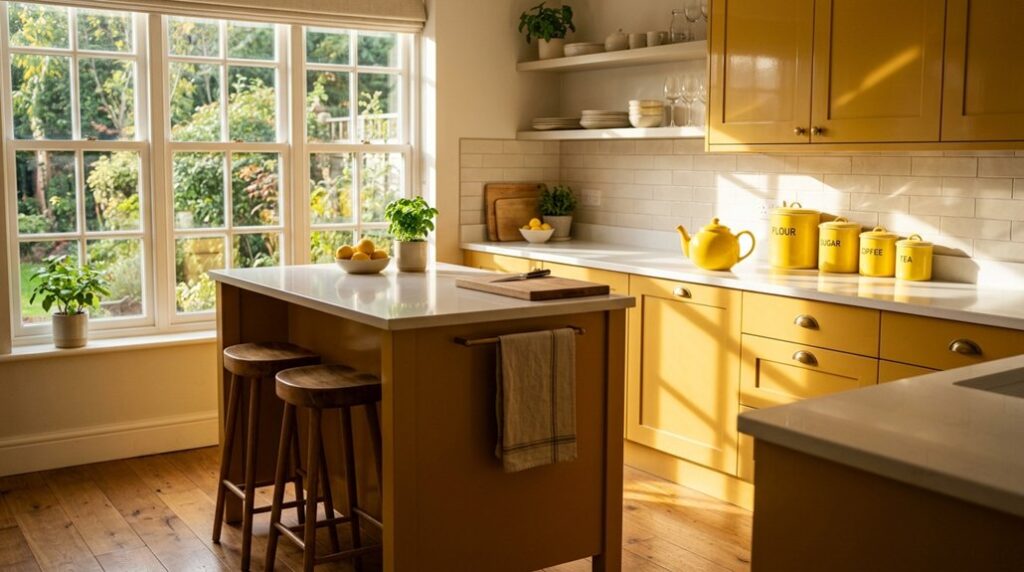
You might think yellow kitchens look too bold or dated, but I’ve found that the right shade creates a warm, inviting space you’ll actually love.
The trick isn’t slapping bright yellow everywhere; it’s choosing soft, pale tones for your cabinets and saving brighter hues for smart focal points.
Want to know which yellows pair beautifully with your existing counters and floors? Let me show you how.
Why Yellow Is Perfect for Kitchens
Ever wonder why yellow kitchens feel so inviting the moment you walk in?
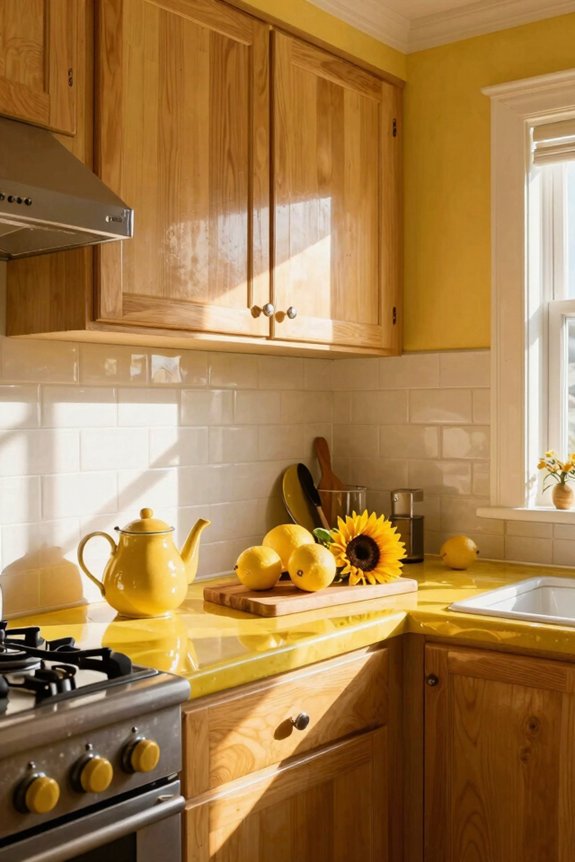
I’ve discovered that yellow brings genuine warmth to any kitchen space. This color practically glows. It evokes energy, comfort, and optimism, making your kitchen feel like the heart of your home. Yellow reflects natural light beautifully, which brightens rooms with southern exposure and large windows.
Here’s what I love most: yellow works with almost everything. It pairs nicely with wood tones, white cabinets, blue accents, gray countertops, and black finishes. Soft pale yellows create cozy farmhouse vibes, while bolder yellows make bold statements when balanced with neutrals.
The best part? You don’t need to commit completely. Use yellow strategically by painting cabinets, accenting an island, or featuring it on your backsplash. This approach energizes your kitchen without overwhelming the space.
Choose the Right Yellow Kitchen Shade
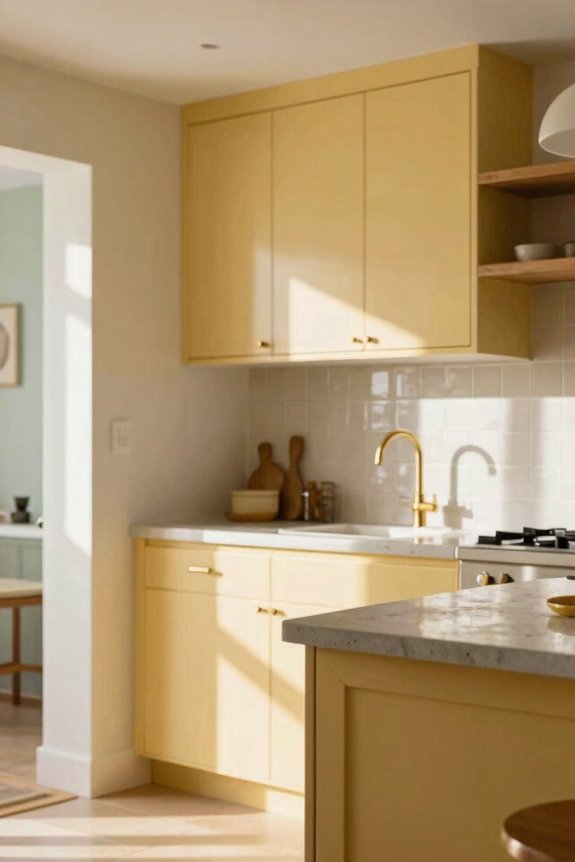
I’ve learned that picking the perfect yellow comes down to three key things you can control. First, you’ll want to think about your kitchen’s natural light and whether the yellow has warm golden undertones or cooler green-tinged ones. This affects how the color actually looks on your walls and cabinets.
Second, the size of your space matters because smaller kitchens might need brighter, more saturated yellows to stay vibrant, while bigger sunny rooms can pull off softer, paler shades without looking dull.
Lighting And Yellow Undertones
Because light changes everything in a kitchen, picking the right yellow shade matters more than you’d think. I’ve learned that natural light dramatically shifts how yellow undertones appear throughout your day. South-facing kitchens? Choose softer, cream-toned yellows instead of bright ones; the sun amplifies everything.
Warm, golden yellows feel cozy and welcoming, while cooler, green-tinged yellows read fresher but might clash with your existing finishes. Use satin finish paint for durability and easy cleaning. Kitchen lighting affects space perception too. Lighter yellows expand smaller kitchens, making them feel airier, while darker yellows add interest on islands or accent walls without overwhelming the room.
Your yellow undertones should complement your countertops, backsplashes, and hardware. This balance prevents that overpowering feeling in naturally bright spaces. Get this right, and your kitchen becomes inviting.
Kitchen Size Considerations Matter
How big is your kitchen? Your space size really matters when choosing yellow shades.
I’ve learned that smaller kitchens need lighter yellows to feel open and airy. Deeper yellows can actually make compact rooms feel cramped and heavy. That’s why I recommend pale yellows paired with white or cream walls. Yellow cabinets work great on islands rather than covering entire walls in tight spaces.
| Kitchen Size | Best Yellow Shade | Pairing Colors | Application |
|---|---|---|---|
| Small (under 100 sq ft) | Light yellow | White, cream | Cabinetry or island |
| Medium (100-200 sq ft) | Soft pale yellow | Light neutrals | Accent walls |
| Large (over 200 sq ft) | Warm yellow | Cool neutrals | Full implementation |
Pair your yellow with light flooring and neutral colors to keep things balanced.
Coordinating With Existing Finishes
Once you’ve picked your yellow shade, the real magic happens when you match it with what’s already in your kitchen! I’ve found that coordinating with existing finishes works really well. Here’s what works:
- Pair yellow cabinets with white or cream backsplashes for balance
- Choose gray or white countertops to contrast warmth beautifully
- Select dark brass hardware that complements without competing
- Try a two-tone approach with wood or pale base cabinets
- Add neutral or cool accent tiles to ground the space
These combinations keep your kitchen feeling cohesive rather than chaotic. I love how dark brass hardware specifically coordinates with warm yellow tones.
The backsplash becomes an important design element; it draws the eye around the room, preventing yellow from overwhelming everything. When you match these elements thoughtfully, your yellow kitchen becomes a welcoming space you’ll genuinely enjoy spending time in.
Ground Your Design With Neutral Flooring and Counters
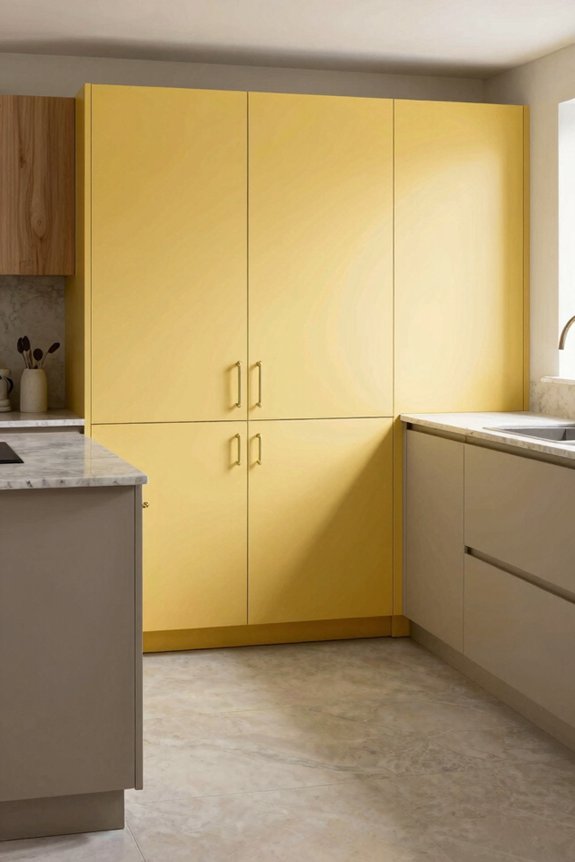
The key to making your yellow kitchen work? I’ve found that grounding your space with neutral flooring and countertops is absolutely essential. Think light hardwoods like oak or maple, paired with white walls and soft stone countertops. This creates that balanced, airy feel you’re after.
Here’s what I recommend: choose flooring with subtle texture. Light tile or natural wood grain work beautifully. Your yellow cabinets become the star without overwhelming everything. Add cream-colored countertops, and suddenly your kitchen feels well-designed and puts together.
The combination works best when you layer these neutrals together. Light gray tile floors, white subway backsplash, and cream quartz counters create a coordinated look. Your yellow cabinets shine without competing for attention.
This approach keeps your space feeling warm and grounded. You’re creating a kitchen that feels both energetic and calm. That’s the sweet spot!
Decide: Yellow Kitchen Walls or Cabinets
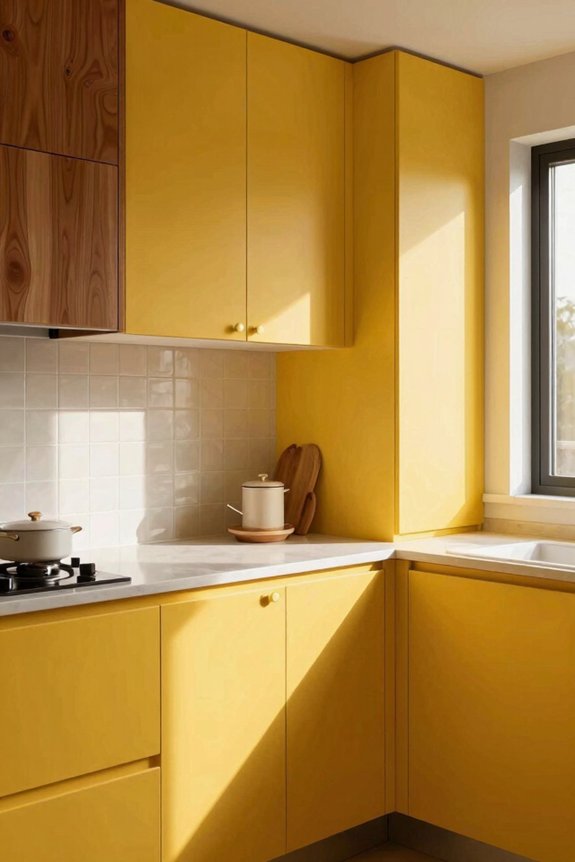
I’ve found that yellow cabinets give you instant impact and anchor your whole kitchen, while yellow walls offer a softer, more subtle vibe that doesn’t demand as much attention.
If you want yellow to be your room’s star, slap it on the cabinets; pair them with white or gray countertops and you’ve got a bold focal point. But if you prefer yellow as a cheerful backdrop, paint your walls instead and keep your cabinets neutral, letting the color whisper rather than shout.
Yellow Cabinets For Impact
Why settle for boring kitchen cabinets when you can make a statement? Yellow cabinets deliver serious impact. I’ve discovered they create vibrant, welcoming kitchens. Here’s how I’d approach this bold color choice:
- Pick your yellow shade: mustard creates drama, soft cream feels subtle
- Balance with neutrals: pair yellow with white backsplashes and gray countertops
- Try two-tone design: yellow uppers with wood base cabinets add depth
- Add black accents: hardware and appliances create contemporary contrast
- Keep walls pale: ivory or soft tones prevent overwhelming your space
You’ll notice yellow cabinets become your kitchen’s focal point right away. They brighten dark corners and make rooms feel larger.
The key is combining them thoughtfully with your color palette. You’re not just choosing cabinets—you’re creating a kitchen personality that shows who you are.
Yellow Walls For Subtlety
Want all that sunny yellow warmth without making your kitchen scream for attention? Yellow walls for subtlety might be your answer. I’ve found that pale, creamy yellow tones create a gentle backdrop that lets your cabinetry contrast beautifully without overwhelming the space. Think soft, warm yellow paired with neutral or white cabinets; it’s a balanced approach that works wonderfully.
This wall color selection strategy works especially well with dark brass hardware and light countertops. The yellow becomes a supporting player rather than the star. I recommend pairing these walls with blonde wood or light gray flooring to preserve brightness and avoid heavy contrast.
You’re creating an inviting space that whispers color instead of shouting it. That’s the beauty of strategic yellow walls.
Balance Yellow With Neutrals and Complementary Colors Using the 60-30-10 Rule
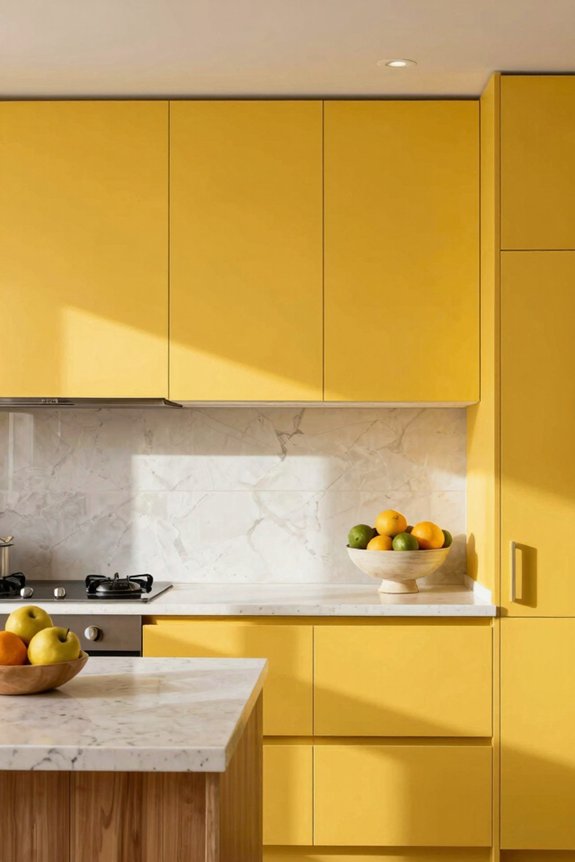
How do you keep yellow from taking over your entire kitchen? I’ve found that the 60-30-10 rule saves the day. Here’s what works:
- Use 60% neutral walls or cabinetry as your foundation
- Apply 30% secondary color like pale blue or charcoal for depth
- Reserve 10% bright yellow for focal points only
- Pair warm yellows with ivory, cream, or soft gray to prevent overwhelming brightness
- Choose dark brass hardware to tie everything together
This approach lets yellow shine without dominating your space. You’re creating balance, not chaos.
Soft, subtle yellows work beautifully on large surfaces, while brighter shades pop on islands or backsplashes. The complementary colors add visual interest without clashing. Your kitchen becomes inviting and coordinated, exactly what you’re after.
Apply the Color Theory: Why Certain Shades Pair Best With Yellow
yellow pairs beautifully with neutrals like white, gray, and black. These create balance without competing for attention. Want something softer? Sage green with cream bases tempers bright yellows perfectly, giving you a grounded palette that feels connected.
Gray undertones make a real difference too. They mute yellow’s brightness, helping it blend seamlessly with modern finishes. For bold contrast, I layer yellow cabinetry with white backgrounds and dark brass hardware. It’s striking!
Match your palette to your style. Pastel yellows suit farmhouse vibes with beadboard. Saturated yellows work for contemporary kitchens. Understanding these pairings means you’ll create a space that feels authentically you.
Finish With Hardware, Tiles, and Accents
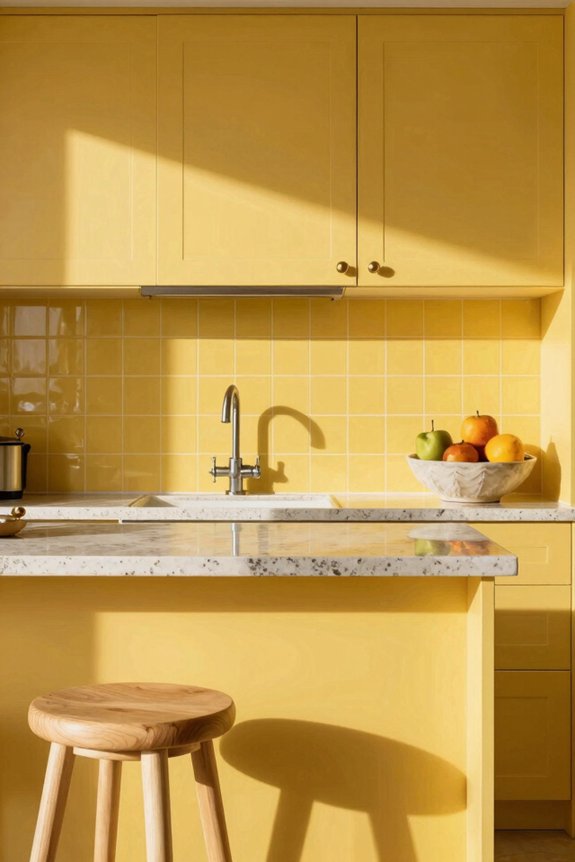
Once you’ve chosen your yellow shade and paired it with complementary colors, the details really make your kitchen shine. I’ve found that finishing touches create a well-designed space. Here’s what I recommend:
- Dark brass hardware coordinates beautifully with yellow cabinets and echoes warm showroom palettes
- White or cream subway tile backsplashes balance brightness while keeping things timeless
- Bold black or charcoal countertops anchor your color palette and prevent yellow from feeling overwhelming
- Yellow pendant lights or patterned accent tiles create energetic contrast without overpowering the room
- Warm wood flooring in oak or maple grounds your entire design
These finishing details matter more than you’d think. I’ve seen how the right hardware and backsplash create a cohesive look, making your yellow cabinets feel intentional and well-planned. You’re creating a kitchen that suits your style and preferences.