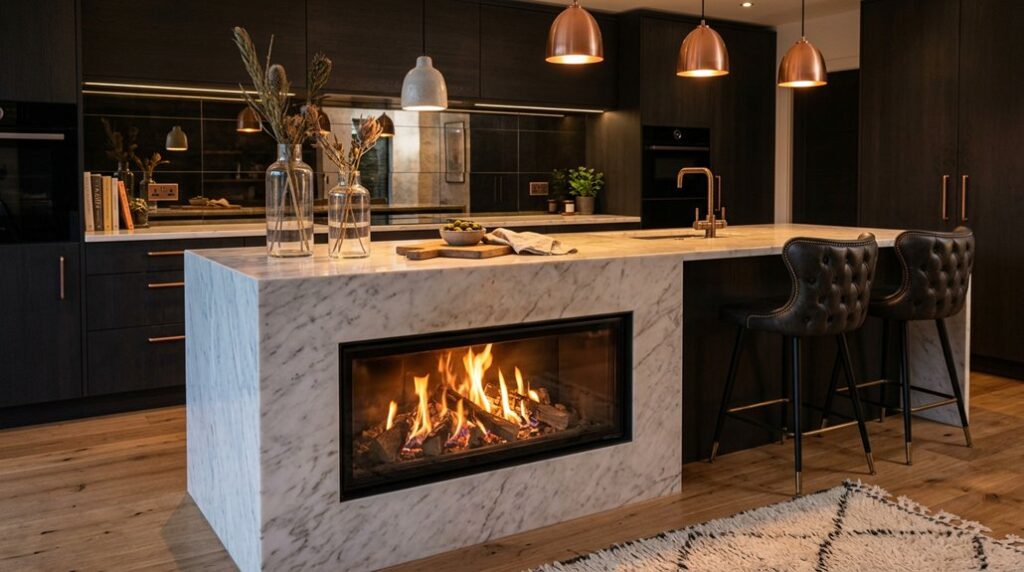
I’ve discovered that a fireplace adds character to an ordinary kitchen and creates a gathering spot where your family actually wants to hang out. It’s not just about warmth; it’s about designing a welcoming space.
But here’s the thing: styling it right takes strategy. The surround, the colors, the seating arrangement, they all work together. Want to know how to nail each element?
Assess Your Fireplace: Functional, Defunct, or Decorative
Before you start styling, you’ve got to figure out what you’re actually working with. Your fireplace in the kitchen falls into one of three categories, and each one needs a different approach.
If yours actually works, you’re golden! You can use it functionally while making it beautiful. Got a defunct fireplace? No problem—stack firewood anyway for visual texture and warmth.
Add greenery or books around the hearth to create interest without guilt. A purely decorative fireplace in the kitchen? That’s your chance to go bold! Emphasize larger decorative pieces and keep the space clean and striking.
Understanding your fireplace’s role helps you style confidently. You’ll know exactly what works best for your specific situation and vision.
Pick a Bold Surround to Anchor the Entire Kitchen
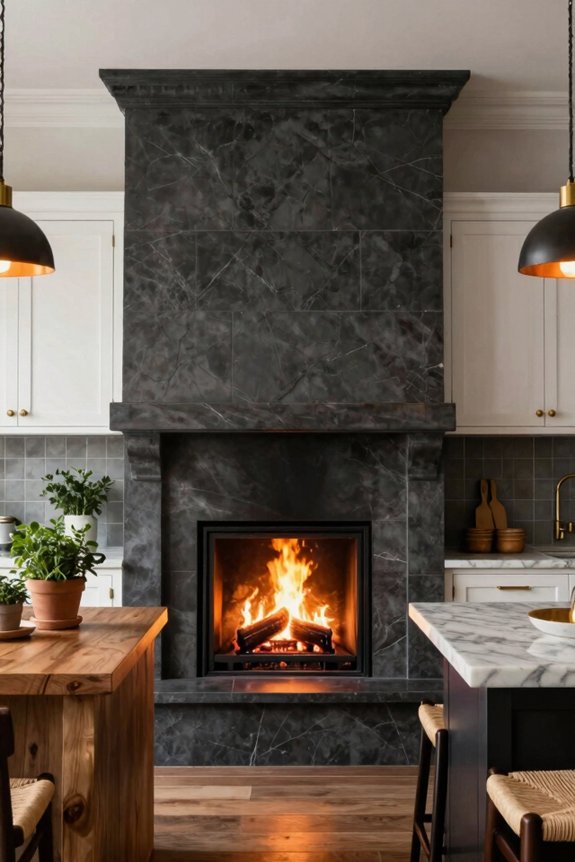
Your fireplace surround is your kitchen’s biggest design opportunity. I’d recommend choosing bold materials like antique stone or brick that will make your fireplace pop against your cabinets and appliances while setting the whole room’s mood.
When you pick the right surround and echo its style in your crown molding and cabinet details, you’ll create real architectural character that connects everything together beautifully.
Material Selection and Impact
When I’m designing a kitchen around a fireplace, I always start with the surround because it’s the strongest architectural feature in the room. The materials you choose really matter. They set the entire mood for your space and connect everything together in a cohesive way.
I typically consider these options:
- Antique stone or rustic brick – These create warmth and timeless charm that pairs perfectly with kitchen cabinetry
- Natural gray and brown tones – They blend seamlessly with countertops and appliances without competing for attention
- Textured finishes – They add visual interest while maintaining cohesion throughout your kitchen
When I select materials, I’m thinking about how they’ll echo in nearby details like crown molding and cabinet doors. This repetition creates harmony. The key is choosing materials that match your home’s age and style, so your fireplace enhances rather than fights with everything else. This is when everything comes together beautifully.
Creating Architectural Character
Once you’ve nailed down your materials, it’s time to make your fireplace really stand out. A bold stone fireplace becomes your kitchen’s anchor point. Think antique stone or rustic brick. These materials create real architectural depth that catches everyone’s eye.
Your stone fireplace should match your home’s age and style. Gray and brown tones work beautifully with most kitchens. They feel timeless and grounded.
Now here’s the fun part: echo that fireplace design everywhere. Match your crown molding. Repeat textures on cabinet doors. This creates visual balance throughout your space.
Pair your statement surround with white cabinetry or complementary lighting. You’re building a unified design. Your fireplace isn’t just a feature anymore. It’s the conversation starter. It’s home.
Balancing Bold Design Elements
Every kitchen needs an anchor, and I’m talking about a fireplace surround that actually demands attention. You want your fireplaces competing with cabinets and appliances, not hiding behind them.
Here’s how I’d approach it:
- Choose antique stone or mixed materials like brick and stone to create real visual interest that feels timeless
- Pick cohesive colors: grays, browns, or white-washed finishes that balance boldness without overwhelming your space
- Repeat design details from your fireplace in nearby cabinetry or crown molding for architectural harmony
A strong mantel becomes your kitchen’s personality. It grounds the entire room and gives everything else purpose.
When your fireplace surround feels thoughtfully designed and connected to your overall style, suddenly everything belongs together. That’s when your kitchen truly feels like home.
Choose Paint and Colors That Highlight Your Fireplace
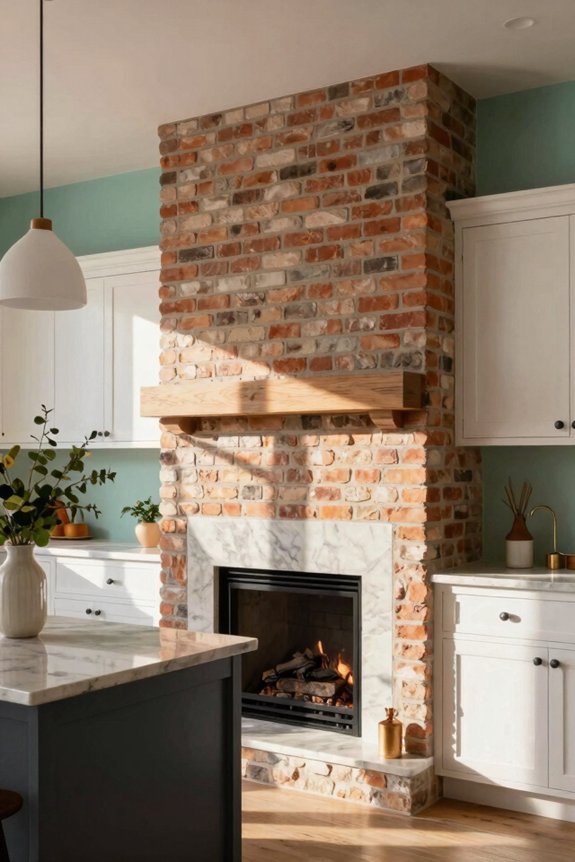
How’d you like to make your fireplace the star of the show? I’ve found that paint color choices really change how this space looks. Here’s what works: paint your back wall and shelves the same color. This creates a unified focal point that draws everyone’s eye.
Consider Evergreen Fog or Shoji White for that polished look. Both colors harmonize beautifully with brick-look textures and stone. You can also keep white cabinetry and introduce a contrasting color on your fireplace area instead. This approach adds visual interest without overwhelming your kitchen.
The key is selecting colors that balance your design elements. A uniform backing color anchors larger decorative pieces nicely. Whether you choose soft sage or crisp white, your fireplace becomes the room’s centerpiece. That’s what intentional color planning can do.
Position Your Kitchen Fireplace Near the Stove for Historic Warmth
Why not place your fireplace right next to your stove? I’ve found this pairing creates authentic kitchen warmth that feels both timeless and functional. You’re combining two heat sources into one powerful zone.
Here’s why this layout works:
- Visual impact: Rustic brick fireplaces contrast beautifully with white cook spaces, creating striking focal points
- Practical warmth: The adjacency lets heat from both features work together, warming your cooking area naturally
- Historic charm: This arrangement echoes traditional kitchens where hearths were essential gathering spots
When you position fireplaces in kitchens this way, you’re not just adding ambiance. You’re creating a functional interaction between hearth and cooking zone. Your kitchen becomes a welcoming hub where family congregates. It turns cooking into a shared experience that feels genuinely warm.
Add Seating Near Your Fireplace for Gathering and Relaxation
I’ve found that adding a couple of petite stools or a small bench near your kitchen fireplace creates a natural gathering spot where you can chat with family or take quick breaks while cooking. This cozy nook gives everyone a front-row seat to the cooking action and makes your kitchen feel more like a living space than just a workspace.
The best part is how this simple addition encourages people to linger, relax, and enjoy time together around the warmth and light of your fireplace.
Cozy Nook Seating Areas
Ever noticed how kitchens change when you add a small seating spot by the fireplace? I’ve discovered that creating a cozy nook near your hearth completely changes your kitchen’s feel. You’re not just adding chairs; you’re building a gathering space where people actually want to linger.
Here’s what makes a nook work brilliantly:
- Two petite stools positioned for clear stove views during cooking
- A dedicated zone that encourages post-work relaxation and conversation
- Quick-break spots that boost your workflow without blocking walkways
I keep my seating subtle and strategic. The fireplaces provide natural warmth, so I don’t need much more. Wide pathways around islands prevent congestion while keeping your hearth seating accessible. This balance creates a kitchen that functions as a genuine gathering hub where functionality meets comfort.
Social Gathering Spaces
Your fireplace seating does double duty: it keeps the sous-chef comfy while cooking, and it creates a welcoming kitchen gathering spot. I’ve found that positioning two petite stools near the hearth creates the perfect gathering zone. Fireplaces naturally draw people together, making them ideal conversation hubs in your kitchen.
Guests can chat with whoever’s cooking without blocking the island walkways. The warmth from the fireplace encourages people to linger during prep work and cleanup. You’re not just adding furniture; you’re building a social space where your kitchen becomes the heart of hospitality.
Position your seating to maximize that fireplace glow. This simple arrangement balances functionality with cozy ambiance, making everyone feel welcome in your space.
Relaxation Zones by Hearth
When you add seating near your kitchen fireplace, something special happens. Your hearth becomes more than just a heat source. I’ve discovered that two petite stools create the perfect spot for quick breaks during cooking prep.
Here’s what makes hearth seating work beautifully:
- Monitor your cooking while resting comfortably between tasks
- Gather naturally as family and friends gravitate toward warmth and light
- Balance functionality with cozy ambiance that encourages lingering conversations
Kitchen fireplaces become social hubs when you intentionally design relaxation zones nearby. I position seating to maintain wide walkways around the island, preventing congestion while keeping that intimate feeling intact.
During cleanup, I love stealing five minutes on those stools, watching flames dance. It’s not just about rest. It’s about creating a space where people genuinely want to spend time together.
Tie Fireplace Details Into Your Cabinet Finish and Hardware
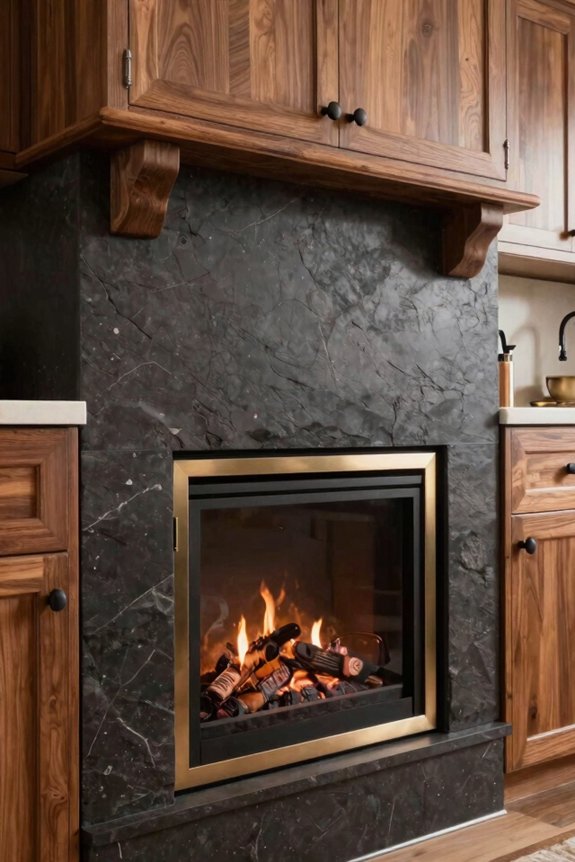
The fireplace and cabinets work together as a team. I’ve discovered that coordinating hardware finishes really improves your kitchen’s appearance. When you match brushed nickel or matte black hardware to your fireplace surround, everything comes together nicely.
| Element | Best Choice |
|---|---|
| Cabinet Hardware | Brushed Nickel |
| Fireplace Surround | Complementary Metal |
| Wall Backing | Evergreen Fog |
| Accent Color | Light Sage |
Your fireplace in your kitchen becomes the focal point when details align. Paint that fireplace area white or light sage while keeping cabinets white. This contrast makes it stand out beautifully. Choose hardware that reflects your fireplace’s metal accents.
These small touches create a unified look throughout your space. You’re building a kitchen that feels well-planned and welcoming to everyone who enters it.
Style Your Fireplace Mantel With Texture, Firewood, and Decor
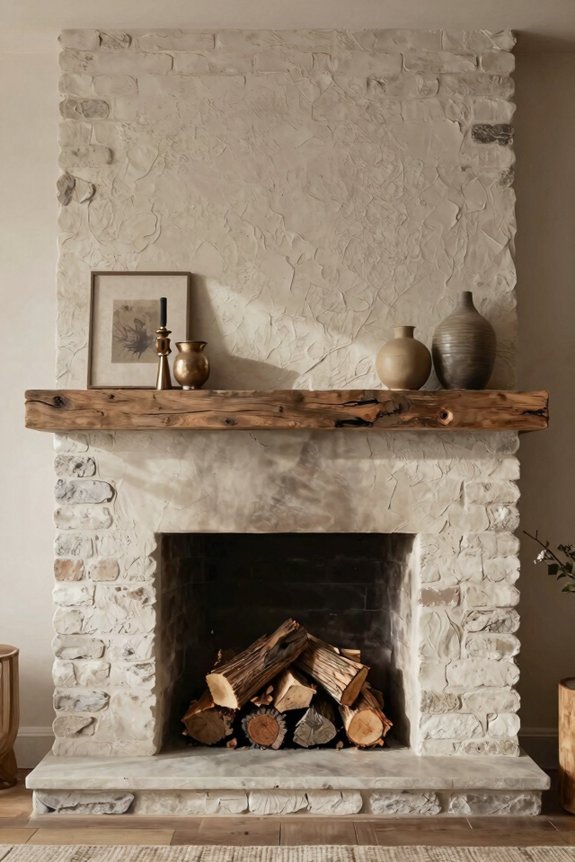
How do you create a fireplace mantel that looks carefully planned and polished? I’ve found that layering different elements creates genuine visual warmth and depth. Your fireplace mantel decor deserves thoughtful styling that reflects your kitchen’s character.
Here’s what I do to make mine shine:
- Stack firewood strategically around the hearth, even if your fireplace isn’t functional, it becomes an eye-catching design anchor
- Add greenery and plants near the hearth for organic texture and tactile contrast that feels alive
- Combine books, natural elements, and coordinating materials like stone or brick tones to echo your kitchen’s architectural style
I’ve learned that matching your mantel’s finishes, whether antique stone or crisp white, strengthens the fireplace as your kitchen’s focal point. These layered textures work together beautifully, creating a space where you’ll actually want to gather.
Transform a Nonfunctional Fireplace Into a Stove Alcove
If you’ve got a dead fireplace just sitting there, here’s a brilliant way to put that space to work: turn it into a stove alcove!
I love how this repurposes fireplace kitchen styling ideas into something functional. You’ll preserve that charming architectural shell while adding modern cooking utility. The former fireplace becomes your cooktop’s frame, creating instant kitchen warmth.
| Feature | Benefit | Result |
|---|---|---|
| Fireplace shell | Built-in framing | Professional look |
| Mantel integration | Storage display | Cohesive design |
| Surrounding texture | Visual interest | Focal point |
Use the existing surround and mantel to anchor your new stove. This low-effort reinvention keeps those antique materials you love while making your kitchen more useful.
You’re joining a design trend that celebrates cozy, integrated cooking spaces where history meets everyday function perfectly.