You’ve got a cramped kitchen and a separate living room, or maybe one big space that feels disconnected. Either way, I’m here to show you how to improve what you have into something worth living in.
The secret isn’t expensive renovations; it’s smart design choices. Let me walk you through seven practical ideas that’ll make your home feel larger, flow better, and actually work for how you live.
Define Your Open-Plan Space With a Kitchen Island
How can you separate your kitchen from your living room without building a wall? A kitchen island does exactly that! I’ve found that positioning an island creates natural delineation without walls, letting you keep your open-plan space feeling connected yet distinct.
Here’s what makes islands so smart: they shape your traffic flow beautifully. I can move smoothly between cooking and dining zones without feeling cramped. For seating arrangement, I love placing a sofa against one side for casual seating while keeping cupboards accessible on the other for storage and function.
Want something more social? Face your seating toward the kitchen instead. This social layout encourages real conversation during meal prep and entertaining. Your island becomes the natural gathering spot where everyone naturally congregates!
Choose Archways for Your Kitchen-Living Room
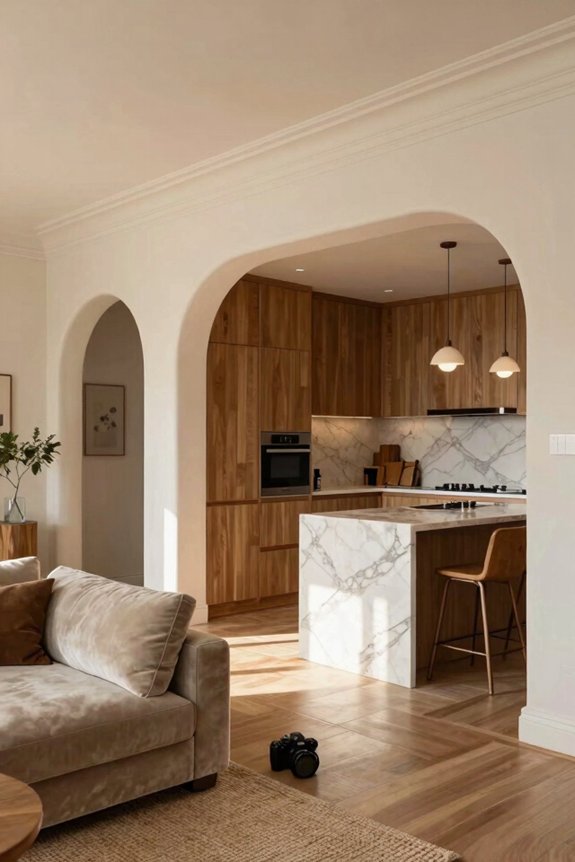
If you want to separate your kitchen and living room without building a wall, archways are an excellent solution. They create a visual connection between the two spaces while giving you that defined boundary you’re looking for.
You’ll get the best of both worlds: an open feel with the design separation that makes your home well-planned and purposeful.
Archways Maintain Open-Plan Feel
When you want to separate your kitchen from your living room without building a full wall, archways are a smart choice. I love how they create that connected link between spaces while keeping everything feeling open and bright.
You can render them in plaster or wood cladding, depending on your style. What I find useful is how they enhance your sightlines across the open-plan layout. You’re not blocking views or natural light; you’re just defining zones smartly.
The best part? You’ll feel like your spaces belong together. Integrated shelving frames on each side add extra functionality too. Your kitchen and living room stay visually connected, creating that warm, unified feeling you’re after. Archways deliver separation without sacrifice.
Visual Connection Without Walls
Archways give you the best of both worlds. They’re my go-to solution when you want separation without actually closing things off. I love how they create visual connection between your kitchen and living room while maintaining that open-plan feel everyone craves.
Here’s what makes them work: large archways enhance flow naturally, letting you see from one space into another. You’ll get unified design by using the same warm off-white finish across both areas. This consistent color creates seamless space separation without walls blocking your sightlines.
For extra style, consider finishing your archway in plaster or wood cladding. I’m particularly excited about integrated shelving framing each side. It adds depth and gives you perfect spots for displaying books or decorative pieces. You’ve created functional art that connects your home beautifully.
Design Features For Separation
How do you split two rooms without throwing up a wall? I’d choose archways! They’re my favorite separation solution because they work beautifully in open-plan spaces.
Archways create a connected link between your kitchen and living room while keeping each area distinct. You get the best of both worlds: separation without sacrificing that connected feeling.
I finish mine in either plaster or wood cladding, depending on my vibe that day. The warm off-white color brings everything together visually. For transition design, I add integrated shelving on both sides of the archway. These shelves frame the opening perfectly and give me practical storage for displaying cookbooks or decorative pieces.
It’s the smartest design feature I’ve discovered for homes wanting defined spaces with flowing energy.
Connect Color and Materials Across Zones
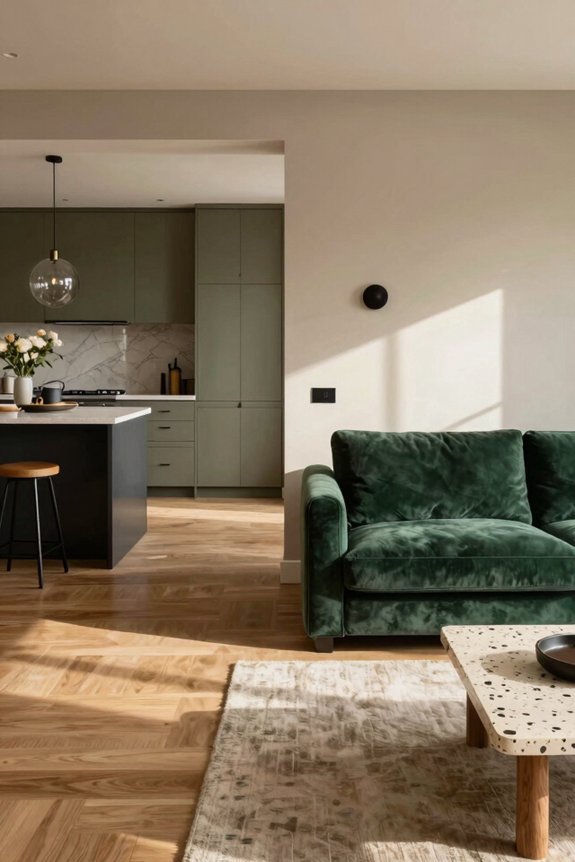
Why do some homes feel like one beautiful space while others feel choppy and disconnected? I’ve discovered the key: a consistent color palette and unified materials.
A consistent color palette and unified materials are the secret to transforming choppy spaces into one cohesive, beautiful home.
Here’s what works. I extend neutrals—whites, grays, beiges—throughout both zones to create visual continuity. Then I repeat finishes. Stainless steel appliances pair with quartz countertops and wood cabinetry, strengthening consistency across rooms.
I’m careful with accent colors too. Throw pillows, rugs, and textiles add personality without breaking the integrated design. Consistent textures tie everything together beautifully.
Don’t overlook hardware and integrated lighting. Matching fixtures in your kitchen and living areas reinforce that single, connected feeling. These transitional accessories create flow naturally. This approach brings your open-concept design together into one harmonious home where every corner feels well-planned and welcoming.
Arrange Kitchen-Living Room Seating for Natural Light
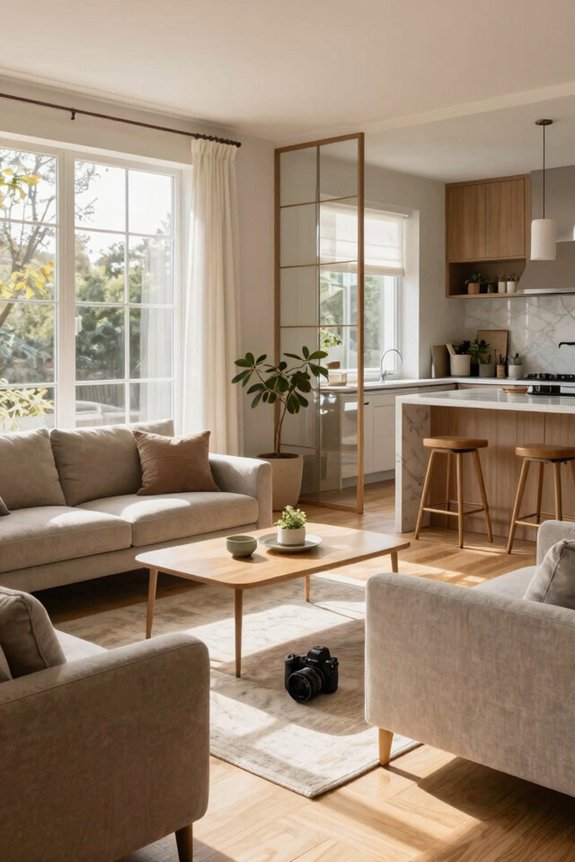
I’m going to show you how strategic furniture placement and smart design choices can bring plenty of natural light into your kitchen-living room. When you position your seating to face windows and use low-profile pieces with exposed legs, you’ll actually feel the difference in how open and bright the space becomes.
Let me walk you through the practical moves that’ll improve how light moves through your connected spaces.
Maximizing Natural Light Flow
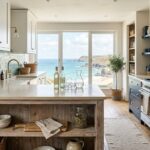
When you’re arranging your kitchen and living room together, natural light becomes your best design friend! I’ve discovered that floor-to-ceiling doors create an unobstructed light flow between zones. Your sightlines matter most—keep furniture heights low so sunshine travels freely across both spaces.
I recommend choosing consistent window treatments that let light in evenly. Avoid heavy curtains that create unobstructed glare and dark shadows. A light-responsive layout means positioning your sofa away from windows, letting rays penetrate deeper into your living area.
Open-concept designs work beautifully when you prioritize illumination over decorative dividers. I skip chunky barriers that block sunshine. Instead, I use rugs in lighter colors and minimal obstructions. This approach creates a bright, welcoming space with light flowing throughout.
Strategic Furniture Positioning
How you arrange your seating is important in keeping light flowing through your kitchen-living room combo! I’ve learned that smart furniture positioning creates natural boundary zones without blocking your sightlines or light. Your open-concept layout works well when you angle sofas strategically and maintain clear circulation paths.
| Furniture Type | Best Position | Why It Works | Light Benefit |
|---|---|---|---|
| L-shaped sofa | Against wall | Defines space | Maintains openness |
| Low-profile seating | Facing kitchen | Sightlines intact | Unobstructed flow |
| Island seating | 3-4 feet clearance | Circulation space | Light diffuses |
| Open-backed chairs | Strategic angles | Boundary zones | Visibility preserved |
I recommend positioning your main seating toward your kitchen activity or central focal point. This space planning approach keeps pathways unobstructed while you enjoy natural light traveling freely. Your layout becomes functional and bright.
Layer Rugs and Furniture to Establish Invisible Boundaries
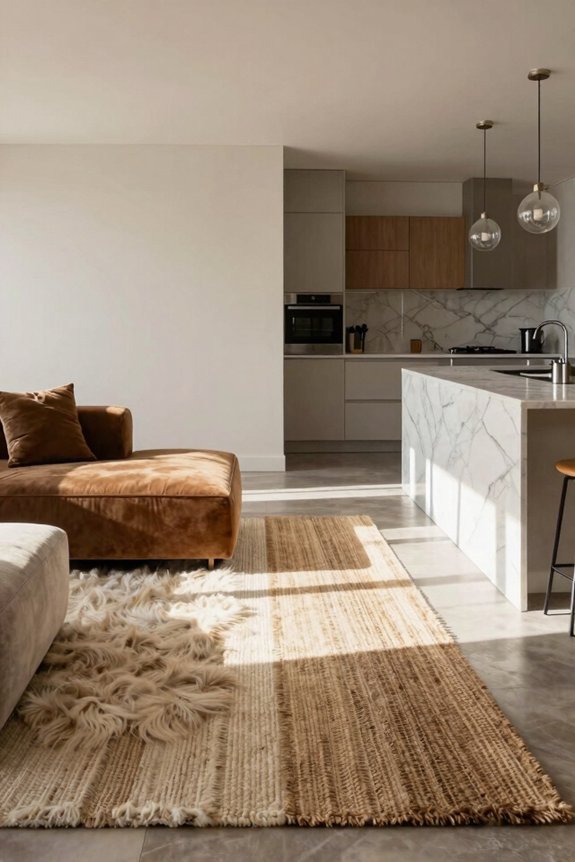
Imagine this: you’ve got an open-plan space, but you want your living room to feel separate from your kitchen without throwing up actual walls. I’ve found that layered rugs work well here. I place a larger area rug under my seating to anchor the living zone, then use a smaller rug near the dining area. Each rug defines its own space beautifully.
I arrange furniture into conversational clusters facing my TV or island, which reinforces zones naturally. I choose rugs with complementary textures and colors that feel cohesive yet distinct. My sofa sits about one meter from walkways, keeping paths clear. These visual boundaries make my open-plan feel purposeful and organized.
You’ll love how furniture arrangement and area rugs divide one big room into multiple inviting zones.
Arrange Pathways Between Kitchen, Dining, and Living Zones
The best open-plan spaces feel effortless to move through, and that’s no accident. I’ve learned that thoughtful pathways change how you actually live in your home. You’ll want at least 90–120 cm of corridor width between fixed pieces, roughly 3–4 feet of clear walkway.
Position your dining table as a visual bridge, not a barrier, connecting your cooking and lounging zones smoothly. Keep high-traffic routes obstacle-free by aligning furniture along walls. I prefer gradual transitions over hard partitions because they maintain that fluid flow you’re craving.
| Zone Strategy | Why It Works | Your Action |
|---|---|---|
| Wall-aligned furniture | Preserves open pathways | Push sofas against walls |
| Dining table placement | Connects zones visually | Center between kitchen and living |
| Clear corridors | Easy movement | Measure 90–120 cm gaps |
| Soft boundaries | Maintains flow | Use rugs, not walls |
Create Multiple Activity Pockets in Large Spaces
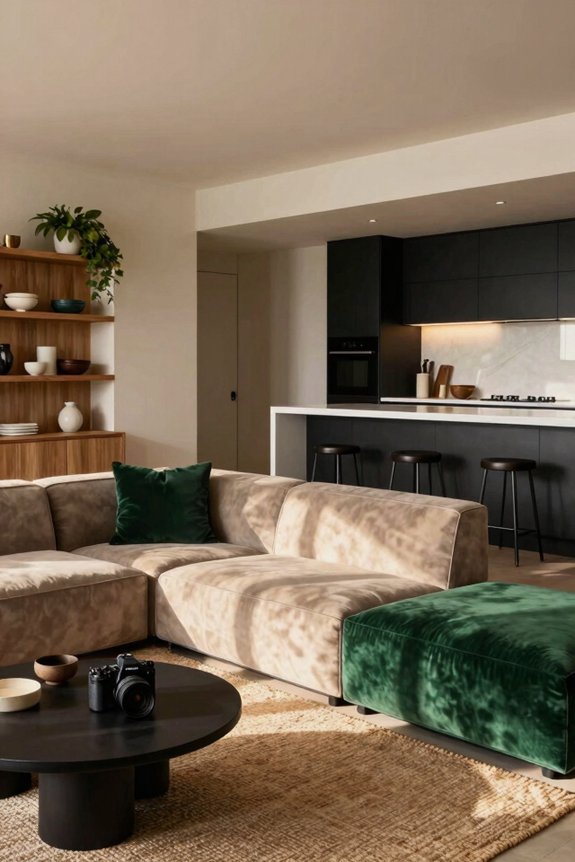
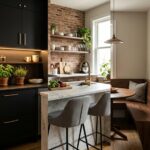
Once you’ve nailed those clear pathways, you’re ready to fill your space with purpose. I create multiple activity pockets by dividing my open-concept area into distinct zones. A cooking hub with an island and stools anchors one corner. A cozy seating lounge clusters around a sofa nearby. My dining nook features a small table, while a reading corner nestles against a low bookshelf.
Each pocket needs its own identity. I use different furniture groupings, textures, and lighting layers: pendant lights over the island, table lamps by the seating area, and a rug defining each zone. This zoning maintains unity without walls while preserving sightlines.
Strategic placement helps traffic flow smoothly between zones. These activity pockets create purposeful areas where my family actually gathers.