Did you know your kitchen can double as a productive workspace without sacrificing style or function?
I’ve discovered that blending work zones into your cooking area isn’t just possible; it’s smart.
With the right setup, you’ll handle spreadsheets and spills on the same surface.
The key is strategic furniture placement, durable materials, and a few clever storage solutions.
Let me show you how to create a kitchen that works as both a cooking area and an office space.
Built-In Desks: Work and Kitchen in One
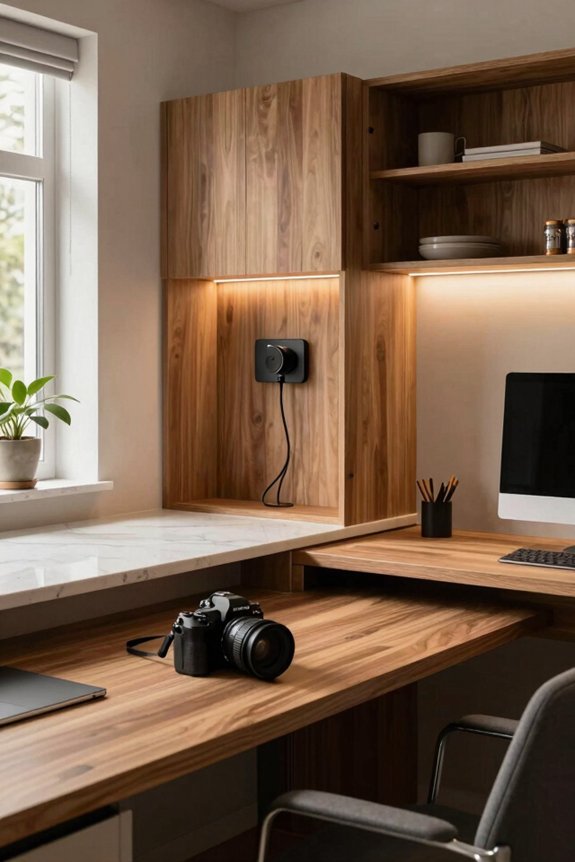
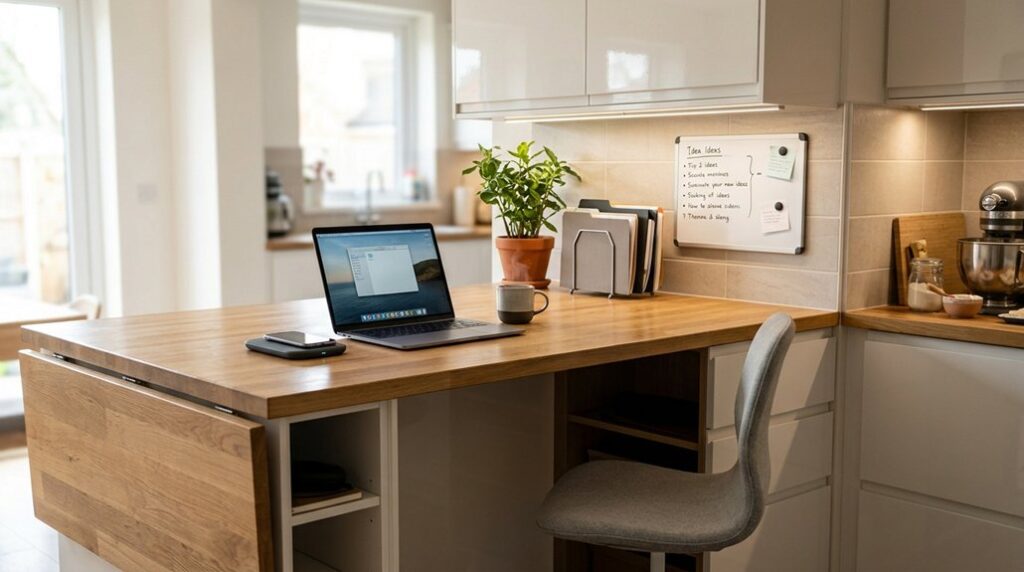
Why settle for a clunky desk that crowds your kitchen when you can build one right in? I’ve discovered that built-in desks work beautifully in your space. They use the same durable surfaces as your countertops, creating a seamless design that makes sense. Your home office blends perfectly with your kitchen zone.
These desks maximize wall space you’d otherwise waste. You get streamlined storage without needing a bulky standalone desk. Cambria countertops work wonderfully here; they’re stain-resistant and maintenance-free, which matters when you’re juggling work and cooking.
Pair a Brittanicca Warm desk with matching backsplashes. This extends your kitchen’s elegance right into your workspace. You’ll feel like you belong in this unified, thoughtfully designed environment where work and home connect naturally.
Hot-Desking: Share One Surface, Save Space
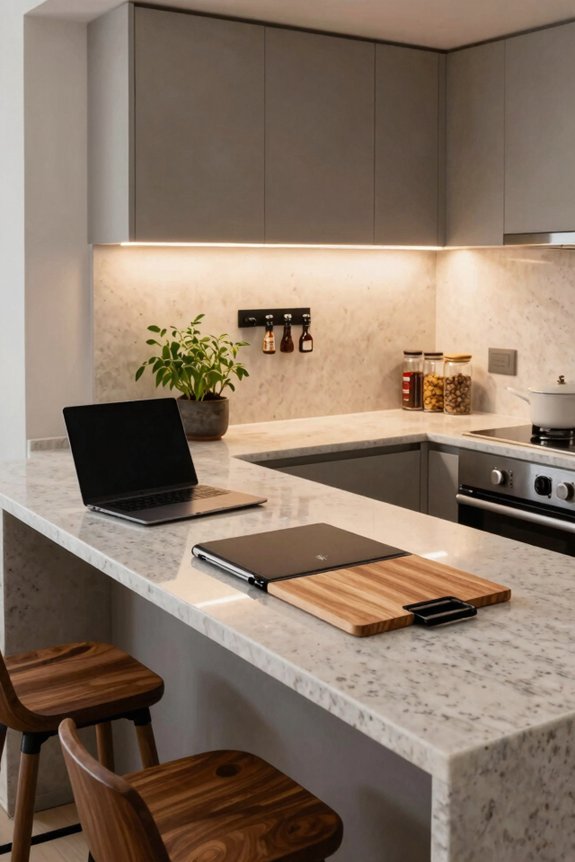
I’ll show you how hot-desking changes how you use your hybrid kitchen office! You’re sharing one desk between multiple people at different times, which cuts your space needs in half and lets you use that extra room for collaboration zones or relaxation areas.
With a simple reservation system and quick-start setup, just plug in your laptop and go. You’ll maximize every square foot while keeping everyone productive!
Flexible Desk Sharing Systems
How many desks sit empty while you’re working from home? That’s where flexible desk sharing systems come in. I’ve found that these setups make our office space much more efficient. You simply reserve a desk when you’re coming in for hybrid work. No permanent assignments needed!
Each workspace has easy plug-and-play device connections, so you’re ready to work immediately. I love how movable partitions let us switch between private focus areas and open collaborative zones. When my team needs a bigger space, we combine multiple desks together. Soundproof glass doors nearby mean we can have confidential conversations without disturbing others.
This system cuts down wasted space dramatically. Everyone feels welcomed because there’s always a spot waiting for you.
Space-Saving Resource Management
Most offices waste tons of desk space because workers aren’t always there to use them. I’ve discovered that hot-desking changes this problem into opportunity. By sharing surfaces, we eliminate unused furniture taking up valuable real estate.
Here’s how space-saving resource management works in practice:
| Resource | Traditional Setup |
|---|---|
| Desks Needed | 10 per 10 employees |
| Monthly Utilities | Higher costs |
| Setup Time | 15+ minutes |
| Storage Solutions | Limited options |
| Collaboration Zones | Fewer available |
| Hot-Desking Approach | |
| 6-7 desks suffice | |
| Reduced consumption | |
| 2-3 minutes max | |
| Shared cabinets work | |
| More flexible areas | |
When I switched to hot-desking, I reclaimed roughly 40% of floor space. Quick-start setups with easy device plugging mean transitions happen fast.
Flexible partitions adapt as needed. You’re joining a smarter way to work together while keeping costs reasonable.
Quick-Start Workstation Setup
Three things make hot-desking actually work: a smart desk design, fast setup, and the right tech connections. Your workday becomes smooth in a flexible workspace.
- Pre-installed power strips and USB ports let you plug in your laptop in seconds, not minutes
- Organized cable management keeps cords from tangling, so you’re never hunting for connections
- Standardized desk heights work for everyone, whether you’re sitting or standing
I’ve found that desks designed for quick transitions save me real time. Each morning, I simply arrive, connect my device, and start working. No fumbling around. No frustration.
This setup builds community too. You’re not stuck in one spot. You move, collaborate, and join your team wherever they’re gathering. That’s the benefit of hot-desking: you save space while staying connected to people who matter.
Turn Dead Corners Into Workstations
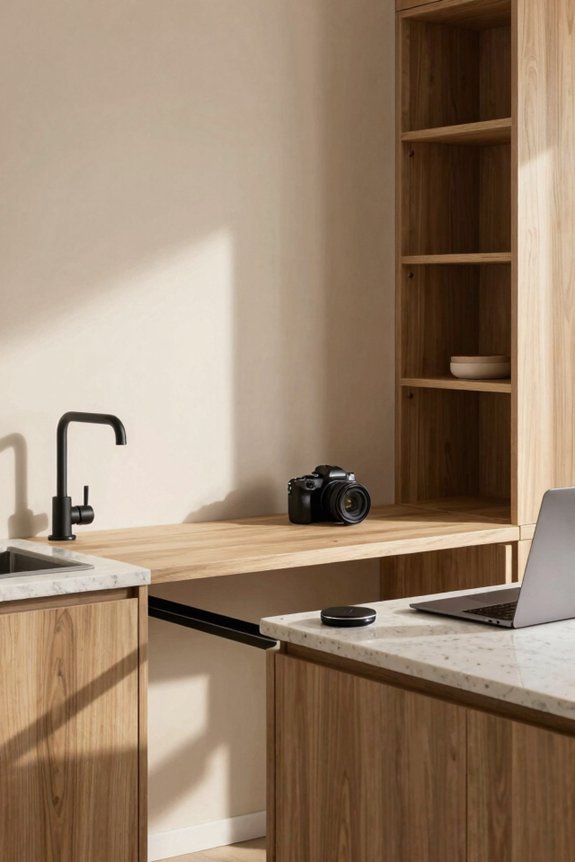
Ever notice that awkward corner gathering dust in your basement or that oddly shaped nook in your hallway? I’ve made these forgotten spaces into productive work areas. Those bare walls and tight corners are perfect for your office design.
A Cambria-backed desk extending along the wall creates a durable, defined workspace with built-in storage. I love how it keeps everything organized without eating up precious floor space. White cabinetry and light-colored walls make compact desks feel crisp and clean. Add geometric chairs for visual interest.
Your home workspace doesn’t need a dedicated room; it needs creativity. Wide hallways, wall closets, even beneath-stair nooks work brilliantly. Start maximizing those dead zones today. You’ll discover what’s possible when you look beyond traditional layouts.
Smart Storage: Keep Paperwork Out of Sight
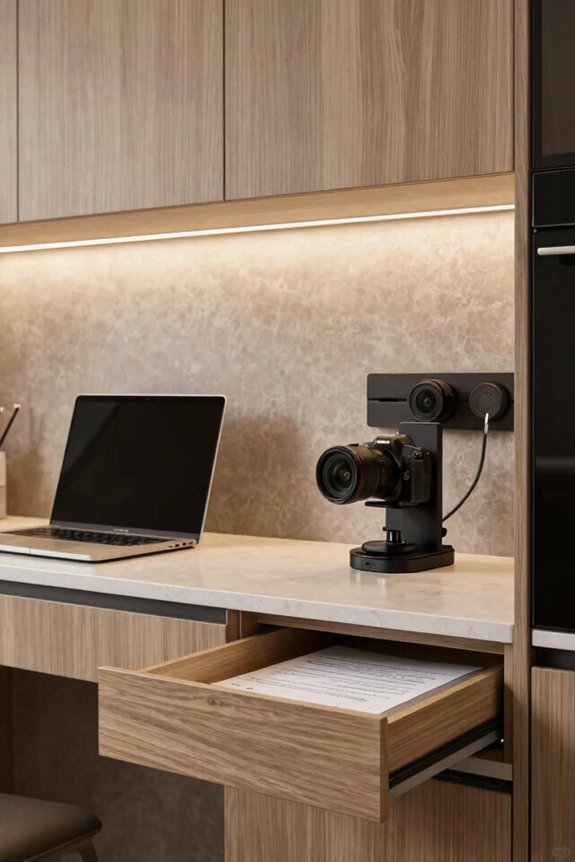
How do you keep your kitchen office from looking like a paper explosion? I’ve found that smart storage helps organize my workspace completely.
Here’s what actually works:
- Filing cabinets – I keep one dedicated cabinet for documents, preventing kitchen chaos from mixing with office paperwork
- Closed cabinets and shelving units – These conceal clutter while keeping essential items within reach in my office space
- Vertical organization – I use wall-mounted shelves to maximize storage without eating up desk real estate
I also swear by notebooks, planners, and sticky notes for quick reminders. They keep my physical workspace cleaner than loose papers everywhere.
Cable management clips work really well too. Everything stays tucked away, and my office space looks organized rather than chaotic. You’ll feel proud showing colleagues your organized setup.
Café-Style Seating in Your Kitchen Office
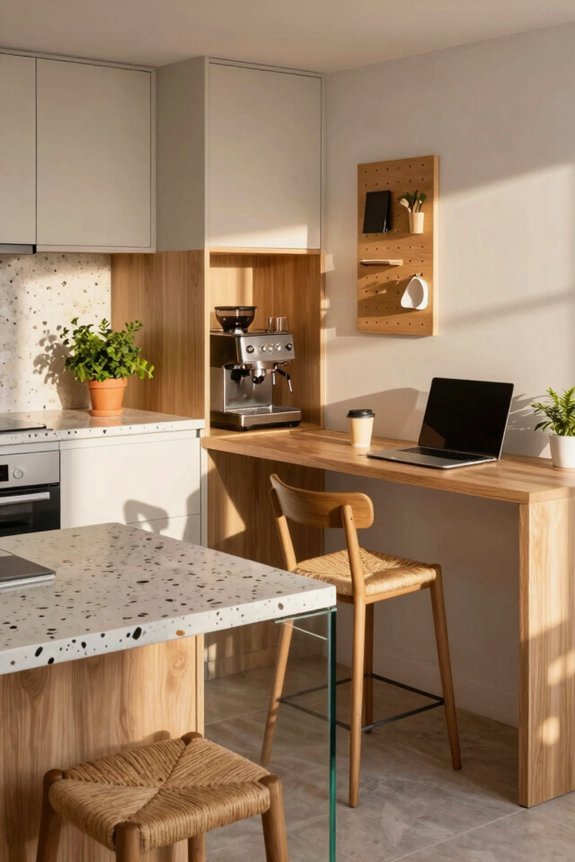
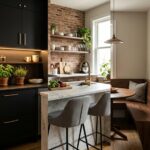
I’ve found that café-style seating changes how my team connects: bar stools around a counter create that casual vibe where informal chats and mentoring occur spontaneously. You’ll want to add a back-bar screen for video calls or group viewing, plus a self-serve station with coffee, snacks, and a microwave so people stay fueled during work sessions.
This setup bridges the gap between remote workers and in-office folks, making spontaneous collaboration feel natural and comfortable.
Informal Collaboration and Connection
What if your kitchen could become the place where your best ideas actually happen?
When you’re working remotely, café-style seating turns your kitchen office into a collaboration hub. Here’s what makes it work:
- Bar stools paired with a large back-bar screen enable video calls and team viewing without formal conference rooms
- Self-serve coffee and snacks encourage spontaneous conversations during breaks
- Casual ambiance reduces meeting friction and sparks creativity across teams
I’ve found that this setup mirrors Google’s proven approach. You’re not forcing collaboration; you’re inviting it naturally. Remote workers can mingle, share ideas, and connect during quick syncs.
The relaxed atmosphere makes hybrid participation feel effortless. You’re leveraging existing kitchen infrastructure to create something genuinely valuable. Your team gets accessibility, social connection, and actual productivity gains. That’s what café-style seating does right.
Casual Ambiance for Productivity
Bar stools and a big screen aren’t just nice to have; they’re the foundation of a kitchen workspace that actually works. I’ve found that café-style seating changes how my team connects. When you add comfortable bar stools around a counter, people spontaneously gather there. A large back-bar screen lets us video conference or share presentations together.
This setup beats isolated desks every time. The casual vibe makes conversations flow easier. You’ll notice spontaneous mentoring moments happen organically. Someone asks a quick question, and suddenly you’re solving problems together.
Google’s revitalized cafes prove this works at scale. Your hybrid office needs this casual ambience. It doesn’t require much space, just thoughtful arrangement. The result is better collaboration, stronger connections, and productive work sessions.
Self-Serve Refreshment Stations
How do you keep your energy up during a long workday without leaving your hybrid office?
I’ve discovered that a self-serve refreshment station makes my kitchen office more productive. Here’s what I include:
- Coffee makers and tea brewers – I skip the coffee shop lines and brew fresh drinks instantly
- Mini-fridge stocked with snacks – I keep yogurt, fruit, and water within arm’s reach
- Microwave for quick meals – I heat leftovers without interrupting my workflow
This setup keeps me energized and focused. I stay put during breaks, which means I’m actually resting rather than running errands.
Plus, when colleagues stop by for coffee, we naturally chat and collaborate. It’s like having a coffee shop vibe right where I work. I feel part of something bigger, a workspace that actually supports how I live and work today.
Set Up Your Workspace to Actually Stay Focused
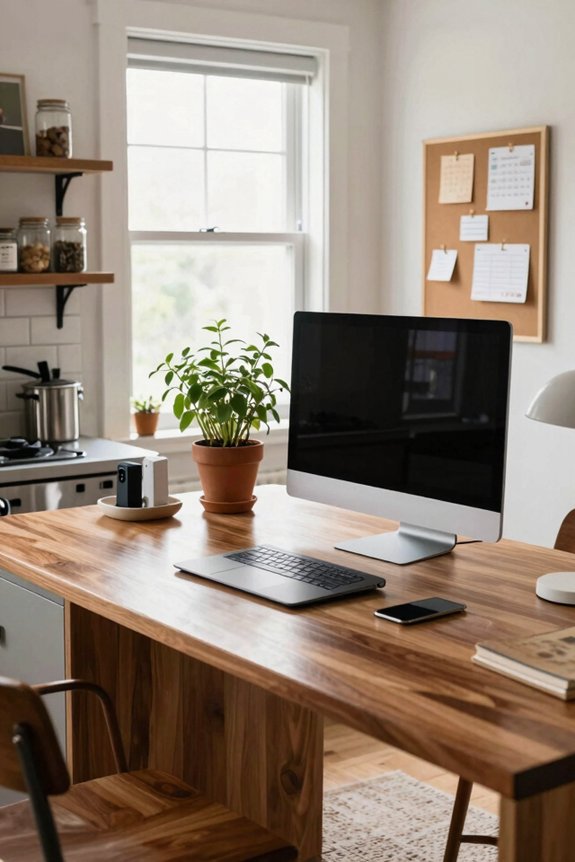
Since you’re splitting your time between work and home life in the kitchen, creating a focused workspace isn’t just nice, it’s essential. I’ve found that strategic design choices make hybrid work actually doable.
Start by zoning your space. Use rugs or dividers to separate your work area from living zones; this signals your brain it’s time to focus. I position my single monitor at eye level and manage cables neatly to eliminate visual clutter.
Lighting matters tremendously. I use a desk lamp plus task lighting to stay alert during long sessions. Your seating needs to be ergonomic; poor posture kills focus fast.
The kitchen island becomes my command center with Cambria surfaces that resist spills. Everything I need stays within arm’s reach. This setup makes my kitchen into a genuine productivity hub.
Durable Surfaces That Handle Coffee and Code
Why do so many home offices fail? They lack surfaces built for real life. You’re juggling coffee cups, paperwork, and deadlines—your desk needs to survive it all.
Home offices fail when surfaces can’t handle real life—coffee cups, paperwork, deadlines. Your desk needs to survive it all.
Here’s what I’ve discovered works:
- Cambria countertops resist stains – Coffee spills won’t ruin your workspace
- Built-in desks use kitchen materials – Creates one cohesive, durable zone throughout your home
- Flip-up shelves maximize space – You get more work area without cluttering surfaces
I started using the same stain-resistant material from my kitchen for my office desk. The difference was immediate. No more anxiety about spills destroying my home office setup.
These surfaces handle everything: hot mugs, ink marks, sticky situations. You’re building a workspace that actually works for you, one that lasts through chaos and keeps looking sharp.