Japanese kitchens actually inspired Scandinavian design, not the other way around. When you combine these two philosophies, you get something distinctive. A kitchen that’s both calm and inviting, with handleless cabinets, soft neutrals, and wood that gets better with time.
There’s a real trick to pulling this off without making your space feel cold or empty. Let me show you how.
Start With Japandi Basics: Japanese Restraint Meets Scandinavian Warmth
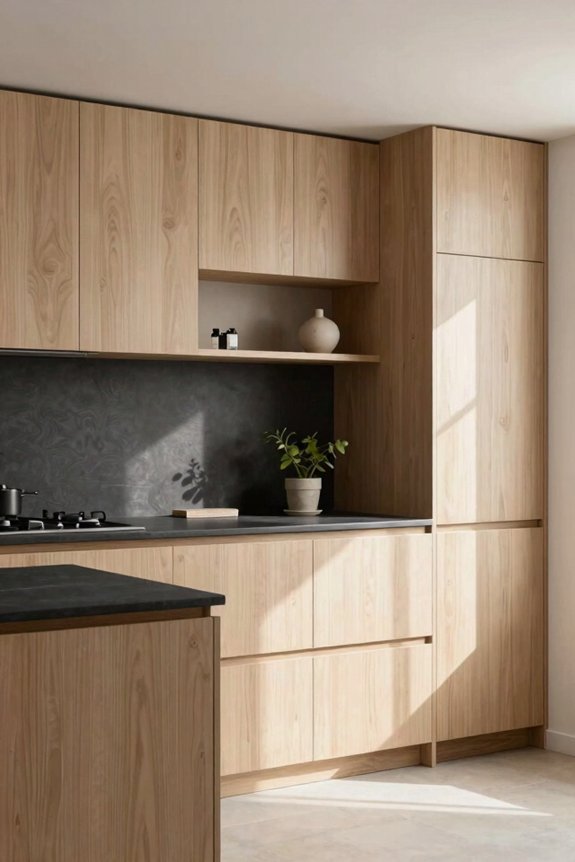
Envision this: a kitchen that feels calm but cozy, clean but lived-in. That’s the appeal of Japandi basics! I love how Japanese restraint strips away clutter, keeping only what you truly need. Meanwhile, Scandinavian warmth brings in natural wood tones and functional beauty that make your space feel inviting.
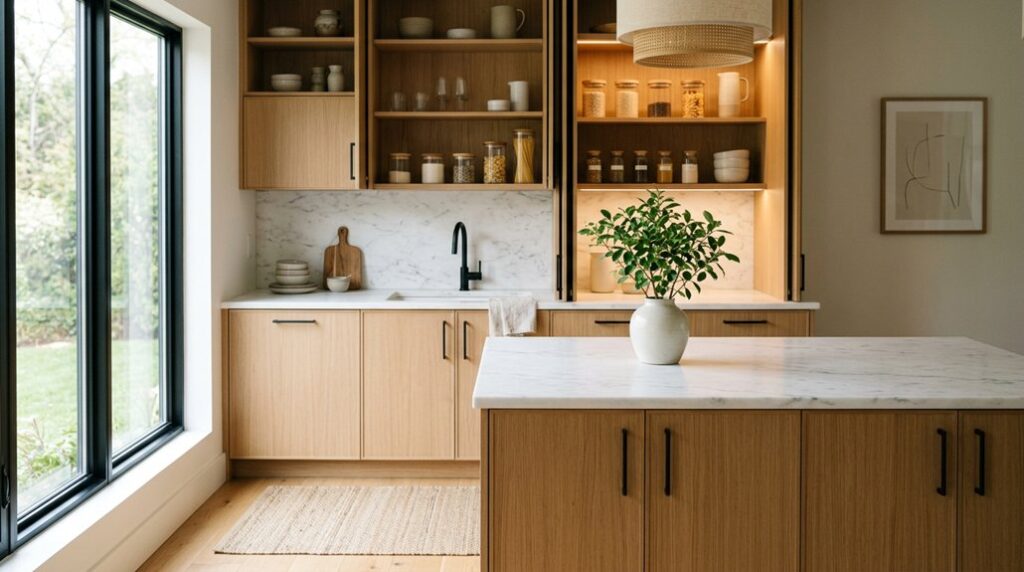
I choose light oak or birch cabinets paired with simple black hardware. The contrast creates depth without feeling cold. I add a stone countertop in soft gray or cream, which is durable and beautiful.
Everything has a purpose. No decorative chaos here. Open shelving displays a few ceramic bowls and wooden utensils. Your kitchen becomes both serene and genuinely livable, reflecting who you are while maintaining that peaceful, uncluttered feel.
Create Space With Japandi Clean Lines and Hidden Storage
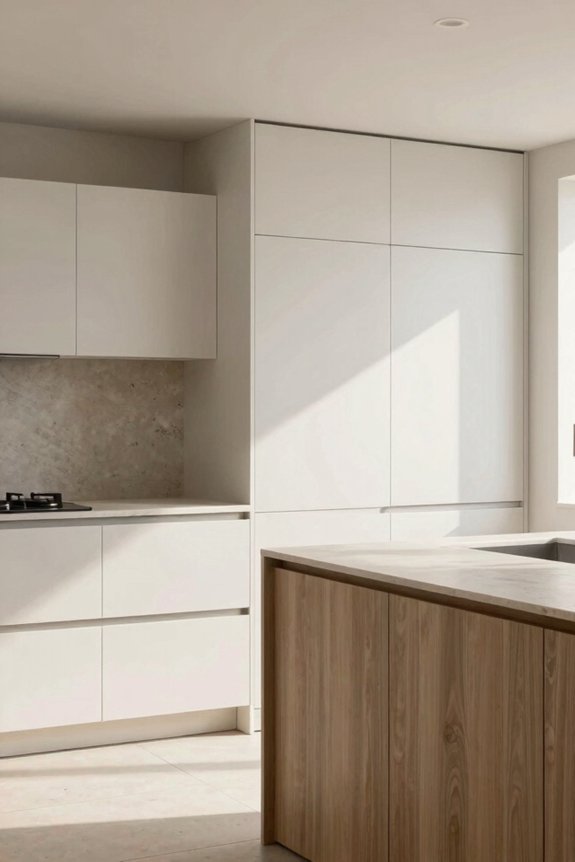
I’ll show you how handleless cabinets, smart vertical storage, and completely clear countertops create a peaceful, open kitchen. You’ll notice the difference immediately: no visible handles means your walls stay calm and uncluttered, while tall shelving pulls your eye upward and keeps everything you need out of sight.
Let’s explore how these three elements work together to make your kitchen feel bigger and more serene.
Handleless Cabinet Design
Ever wonder why some kitchens feel so calm and organized? Handleless cabinets are the solution! I love how they create that clean, uninterrupted look that screams minimalism and Japandi style. There’s literally nothing sticking out to catch your eye or your clothes.
Here’s what makes them brilliant: push-to-open mechanisms and soft-close drawers work flawlessly without visible hardware. You just gently press the cabinet front, and it glides open. No clunky handles cluttering your aesthetic.
The design demands precision, though. Gaps must be perfectly uniform, and doors need to close flush. When done right, you’re looking at streamlined dimensions that feel carefully considered and balanced.
Pair natural timber or matte neutral finishes with white worktops, and you’ve got warmth meeting serenity. That’s sophisticated design happening in your kitchen!
Vertical Storage Solutions
Your kitchen’s real estate extends way beyond the countertop; it goes all the way up! Vertical storage is an effective approach to organizing without cluttering your spaces. Here’s what makes this strategy work:
- Tall, slim cabinets that reach the ceiling maximize every inch
- Open shelving paired with handleless drawer fronts keeps surfaces clean
- Vertical dividers inside pantry units organize cookware and appliances neatly
Light wood finishes on these tall cabinets prevent the space from feeling heavy. I love how built-in appliances integrate seamlessly with surrounding cabinetry, creating one unified look.
This minimalist strategy lets you store more while maintaining calm, clean lines. Your Japandi kitchen becomes functional without feeling cramped or busy.
Uncluttered Surface Aesthetics
How do you keep a kitchen calm and beautiful without hiding all your stuff behind closed doors? I’ve discovered that Japandi design is your answer! The secret lies in strategic placement and hidden storage solutions that work harder than you’d think.
I keep my countertops completely clear by using handleless cabinets and pull-out organizers. These store everyday tools, spatulas, measuring cups, and cutting boards in dedicated spots you can’t see. Natural wood surfaces stay smooth and uninterrupted, creating that serene feeling I craved.
Tall cabinetry maximizes vertical space while keeping visual clutter minimal. Open shelving? I use it sparingly for beautiful items only. The result? Uncluttered surfaces that actually function beautifully. Your kitchen becomes both peaceful and practical, exactly what Japandi promises!
Build a Japandi Color Palette With Neutrals and Warm Accents
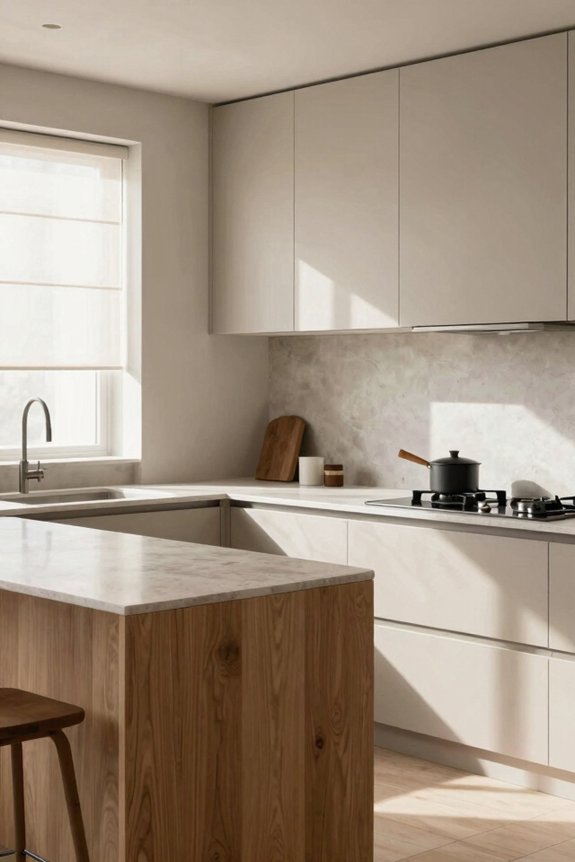
I’m going to show you how to build a Japandi kitchen that feels calm and inviting through smart color choices. You’ll start with neutral foundation colors like white, beige, and grey, then layer in warm wood tones and subtle accent colors to create depth without overwhelming the space. Let me break down exactly how to balance these elements so your kitchen looks both peaceful and sophisticated.
Neutral Foundation Colors
The foundation of a Japandi kitchen starts with a calm, timeless color palette: think white, beige, grey, and taupe as your main players. I’ve found these neutral shades create the perfect backdrop for everything you’ll add later.
Here’s what I recommend for your neutral foundation:
- White walls or cabinets – They brighten your space and keep things feeling open and airy
- Beige or taupe countertops – These warm neutrals soften the minimalist look beautifully
- Grey accents on trim or islands – They add subtle depth without overwhelming your kitchen
You’re building a blank canvas here. These colors work together seamlessly, letting natural light bounce around and making your minimalist kitchen feel welcoming.
Your neutral foundation becomes the stage where warm wood tones and textures shine next.
Warm Accent Layering
Now that you’ve got your neutral foundation locked in, it’s time to layer in the warmth that makes Japandi kitchens feel like home instead of a showroom.
I love introducing warm accents through soft pink, taupe, and warm grey tones. These colors punch up your beige and cream bases without screaming for attention. Add wool throws over kitchen stools. Drape linen cushions on seating. Place wooden accessories on open shelving.
The magic happens when you blend lighter cabinetry with darker wood accents. This contrast creates visual interest while keeping minimalism intact. I’d suggest pairing cream cabinets with walnut shelving or a charcoal island.
Soft white or amber bulbs in minimalist fixtures enhance your Japandi palette beautifully. You’re building layers of warmth that invite people in.
Balancing Depth With Warmth
How do you keep your kitchen from feeling cold and sterile when you’re working with all those neutrals? I’ve found that creating warmth and depth in your Japandi color palette actually comes down to smart material mixing.
Here’s what works:
- Pair white cabinetry with walnut wood countertops for instant warmth
- Add a terracotta or stone backsplash to break up pale surfaces
- Use charcoal accents strategically against light walls for visual contrast
The trick is balancing surfaces intentionally. I combine matte cabinet finishes with textured wood and stone elements. This contrast creates the depth you’re after without feeling heavy or overwhelming.
Natural light amplifies this effect beautifully. Large windows let your materials shine, while handleless storage keeps sightlines clean. Those warm ceramic accessories and woven textiles help enrich the space while staying true to minimalist principles.
Choose Natural Materials That Age Beautifully
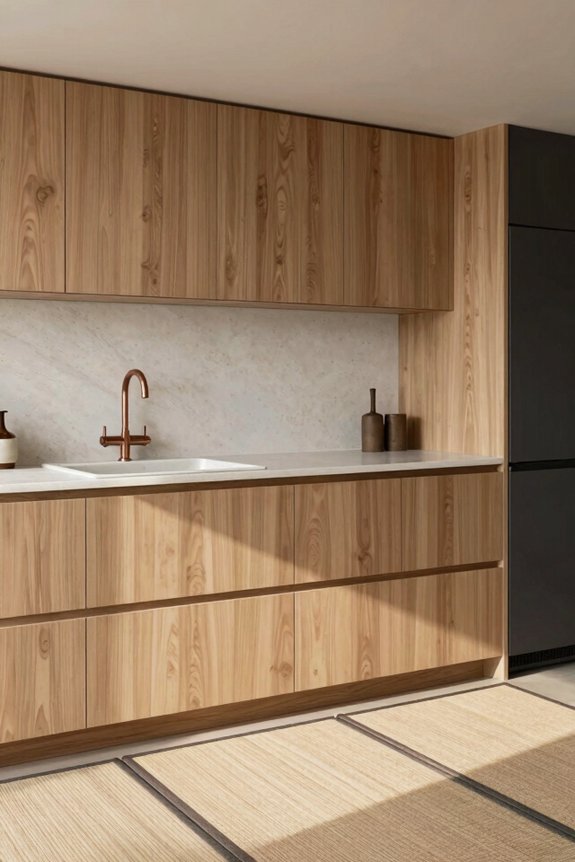
When you fill your kitchen with real wood, stone, and ceramics, these materials don’t just sit there looking pretty; they actually improve over time. I’ve discovered that choosing quality timber creates a foundation for aging gracefully. Walnut and oak develop richer patinas as they’re used daily. Stone countertops gain character from natural wear. Ceramic tiles become even more beautiful when properly sealed.
These natural materials aren’t just durable, they’re investment pieces. They’re built to handle your family’s real kitchen life. I love that quality craftsmanship means your kitchen evolves with you rather than looking dated after five years.
You’re creating something that’ll feel warm and welcoming for decades. That’s the Japandi promise: beauty that deepens with time.
Master Japandi Craftsmanship in Cabinet Details and Joinery
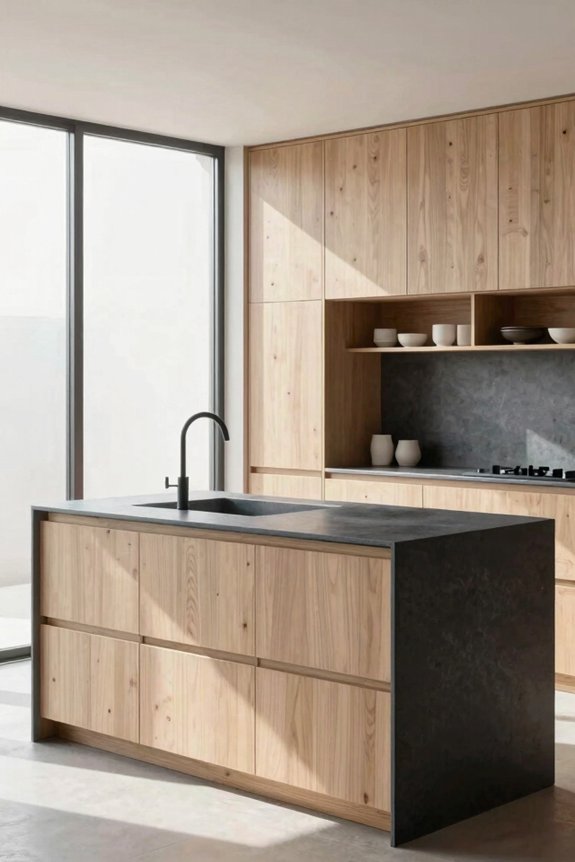
The real excellence of Japandi kitchens lives in the details you might not notice at first glance. When you open a cabinet, you’re experiencing intentional craftsmanship that sets this style apart.
Here’s what makes the difference:
- Box joints and seamless drawer-front integration create clean lines while hiding complexity underneath
- Hidden hardware keeps surfaces uncluttered and lets natural timber shine without visual interruption
- Chamfered edges and precise panel alignment show the care invested in every piece
I find walnut and oak are perfect choices. Their rich grain patterns become focal points when finished in matte or satin sheens. Soft-close mechanisms whisper shut instead of slamming, adding luxury to everyday moments. These thoughtful touches bring together quality craftsmanship and minimalist design in your kitchen.
Style Your Japandi Kitchen Without Clutter: Accessories and Final Touches
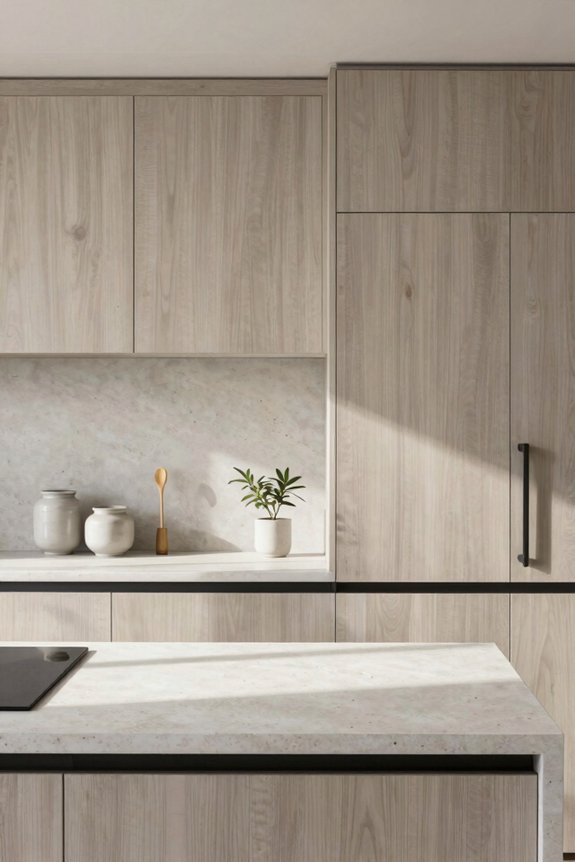
Storage is key to this approach. I use hidden cabinets and seamless drawers to keep countertops bare and clean. This keeps minimalism looking intentional, not empty.
I add handcrafted ceramic objects sparingly—perhaps one or two pieces celebrating artisan work without creating visual noise. A single, well-placed houseplant softens hard lines while preserving that peaceful Japandi feeling.
My color story stays restrained: beige, sand, and stone with charcoal or indigo accents for depth. Every accessory earns its place here, and that’s how I’ve mastered this balanced aesthetic.