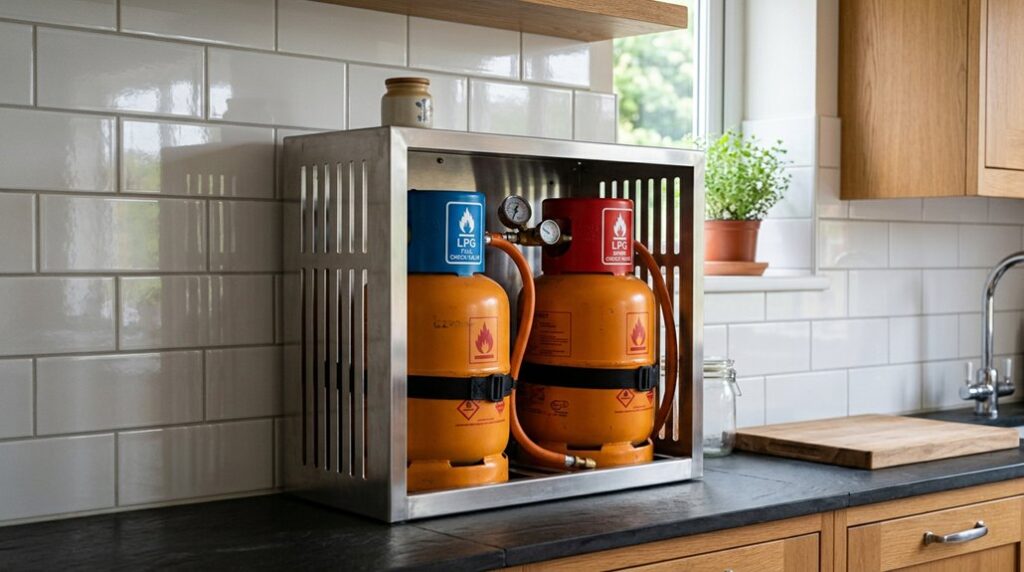
I’ll admit it, I used to just shove my gas cylinders wherever they fit! But here’s the thing: safe storage isn’t complicated, and it actually saves you space and headaches. Whether you’re dealing with one cylinder or several, the right setup keeps your kitchen safer and more organized.
So where should you actually put them? Let’s figure that out together.
Select a Ventilated Cabinet Away From Heat
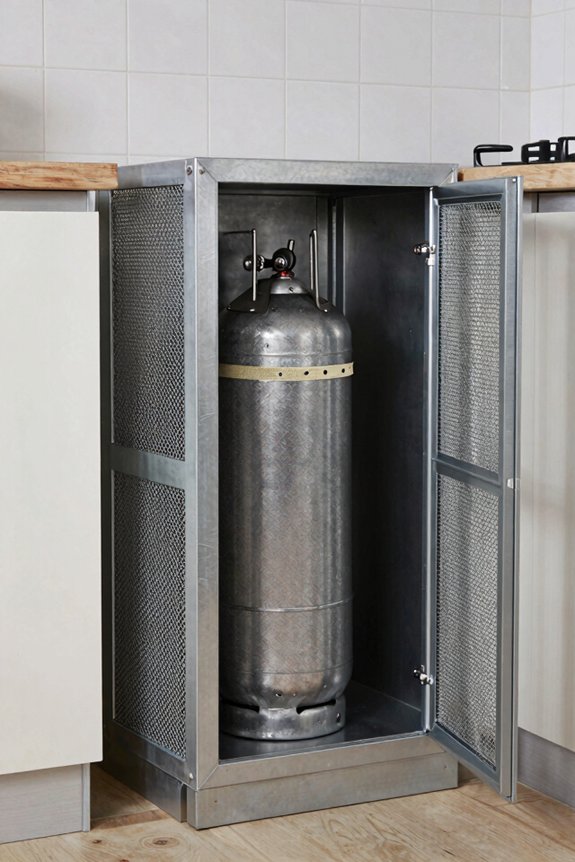
How can you keep gas cylinders safe right in your kitchen? I’ve found that choosing a ventilated cabinet is important for gas cylinder safety. You’ll want louvered or mesh panels that let air flow continuously while protecting your cylinders from damage.
A ventilated cabinet with louvered or mesh panels ensures continuous airflow while protecting your kitchen gas cylinders from damage.
Location matters a great deal. I always place my cabinet away from heat sources, stoves, and anything that could spark a flame. This simple step significantly reduces fire risk in your cooking space.
Here’s what I look for: galvanized steel construction that resists rust and corrosion from humidity. Your kitchen environment can be tough on storage solutions, so durability counts.
Think of your ventilated cabinet as your kitchen’s safety guardian. It’s not just storage. It’s peace of mind. When gas cylinders have proper airflow and protection, you’re creating a safer cooking environment for everyone.
Install Wall-Mounted Racks for Space Efficiency
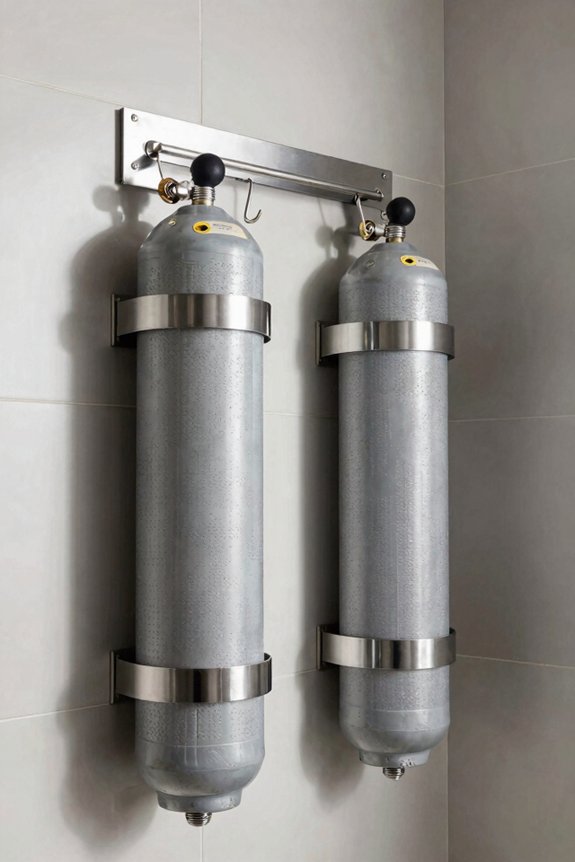
Wall-mounted racks change how I store my gas cylinders; they climb up instead of cluttering my countertops! I’ve found that securing them properly with sturdy fasteners and anti-tipping restraints keeps everything safe while opening up valuable floor space.
Let me show you how these vertical storage solutions work and why the right mounting method is important.
Maximizing Vertical Kitchen Space
Ever wonder where you’d stash extra gas cylinders if your kitchen counters are already packed? I’ve found the perfect solution: wall-mounted racks! These stainless steel beauties free up precious counter space while keeping your gas cylinders within arm’s reach.
Here’s what makes vertical storage brilliant. I position racks at safe heights to prevent tipping and ensure quick access during cooking. The racks accommodate standard cylinder diameters securely, eliminating fall risks. I label each group clearly, oxygen here and LPG there, so handling errors vanish in my busy kitchen.
Installation matters tremendously. I fasten everything to wall studs using proper hardware, meeting local safety codes completely. This approach gives me peace of mind while maximizing my kitchen’s footprint. Vertical storage changes chaotic counters into organized, accessible zones.
Secure Mounting Installation Methods
Getting those racks up on your wall properly is important for a storage solution that works. I’ve learned that securing wall-mounted racks requires finding your wall studs first, they’re your foundation. I use a stud finder, then drill pilot holes before anchoring brackets with heavy-duty screws. This prevents tipping when you’re grabbing cylinders during rush service.
I position each rack so cylinders stand upright, not sideways. Protective restraints keep them from rolling around. Stainless steel racks resist kitchen moisture beautifully, and honestly, they look professional too.
When you anchor properly to studs, your setup stays rock-solid through constant access. That’s when you know you’ve nailed it. Your team stays safe, and your cylinders stay exactly where you need them.
Use Sturdy Stands to Prevent Tipping
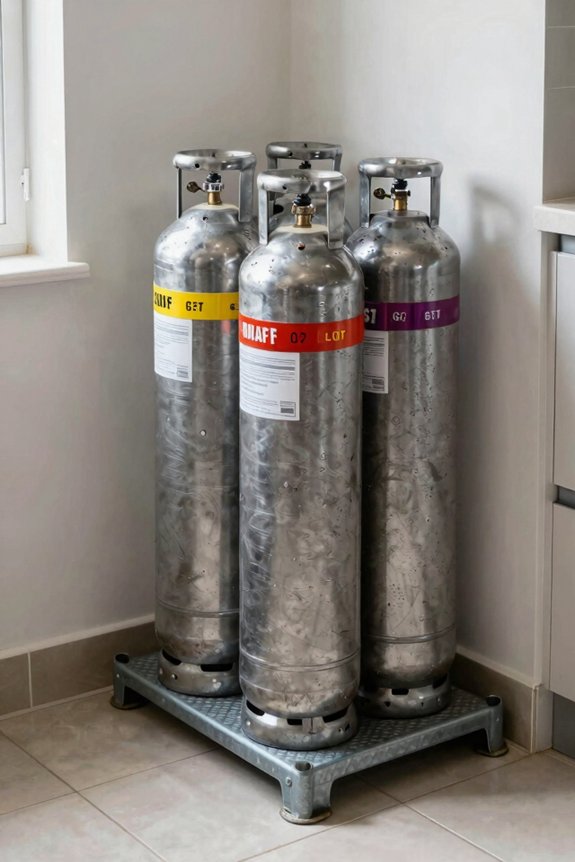
Why do gas cylinders tip over in kitchens? They’re heavy and top-heavy, making them unstable on floors. I’ve learned that sturdy gas cylinder stands are your best defense against accidents.
Gas cylinders are heavy and top-heavy, making them unstable on floors. Sturdy stands are your best defense against accidents.
I recommend metal or galvanised steel storage racks because they’re durable and strong enough for the job. These stands keep your cylinders upright and secure, which matters for safety.
Here’s what I look for: stands with secured bases and non-slip feet that prevent sliding. For tipping prevention, dedicated cylinder stalls work wonderfully; they cradle your tanks and eliminate wobbling.
I’ve seen how proper storage racks improve kitchen safety. Your cylinders stay put, your family stays safe, and you get peace of mind. That’s worth the investment!
Separate Full Cylinders From Empty Ones
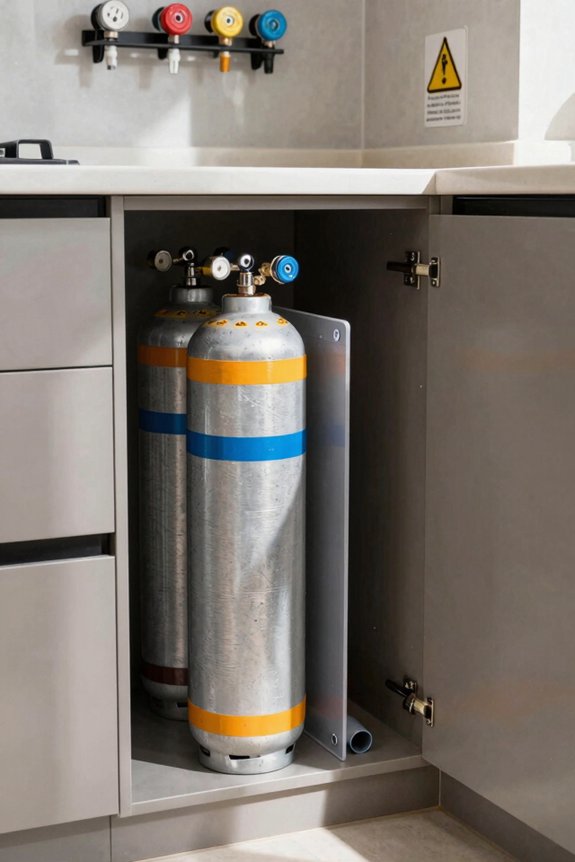
How you organize your cylinders makes a huge difference in kitchen safety and convenience. I keep my full and empty cylinders in completely separate spots. This cylinder separation prevents dangerous mix-ups when I’m cooking or restocking. Here’s my system: full ones go on the left shelf, empties on the right.
I’ve labeled each section clearly so everyone in my household understands the difference. When I grab a cylinder quickly, I know exactly where to look. Full vs empty distinction takes seconds but saves real headaches.
I’ve also found that safer storage means less fumbling around. No more wondering if a cylinder’s got enough gas left! This simple organization keeps my kitchen running smoothly. Once you establish this routine, you’ll notice how much faster everything becomes.
Track Inventory With a Simple Labeling System
I’ve found that color-coding your cylinders, like marking full ones with green tape and empty ones with red, makes it very easy to grab what I need at a glance. You can pair this with a simple digital spreadsheet or even a checklist on your phone to track when cylinders were opened and what’s running low.
This combination keeps me organized and helps me avoid those frustrating moments when I reach for a cylinder that’s already empty!
Color-Coded Cylinder Status
Ever grabbed the wrong gas cylinder in a rush? I’ve been there. Color-coded labels improved my gas storage safety dramatically. I now use bright stickers to mark each cylinder’s status instantly.
Here’s my system that works:
| Color | Cylinder Status | What It Means |
|---|---|---|
| Green | Full | Ready to use |
| Yellow | Partial | Some gas remains |
| Red | Empty | Needs replacement |
This visual system prevents mix-ups when I’m busy. Full cylinders stay in one zone. Empty ones go elsewhere. I distinguish gas types too. Oxygen versus nitrous oxide never get confused now.
My inventory checks take minutes instead of guesswork. Everyone in my kitchen recognizes the labels immediately. No more fumbling through storage. Color-coded cylinder status keeps my gas storage safety reliable and organized.
Digital Inventory Management System
When you’ve got multiple gas cylinders scattered around your kitchen, keeping track of what’s full, what’s partial, and what’s empty gets messy fast. I’ve learned that a simple digital inventory management system brings order to this chaos.
Here’s what works: I label each cylinder distinctly and link those labels to a basic tracking app on my phone. I can instantly see which cylinders live where and their current status. Adding barcodes or QR codes makes check-in and check-out lightning-quick, no more guessing games.
This labeling system keeps my kitchen safer too. I know exactly where my full gas cylinders are versus empty ones, so I organize them properly. My inventory management becomes foolproof, reducing handling errors dramatically. It’s truly the smartest move I’ve made.
Store Caps and Hoses in Labeled Containers
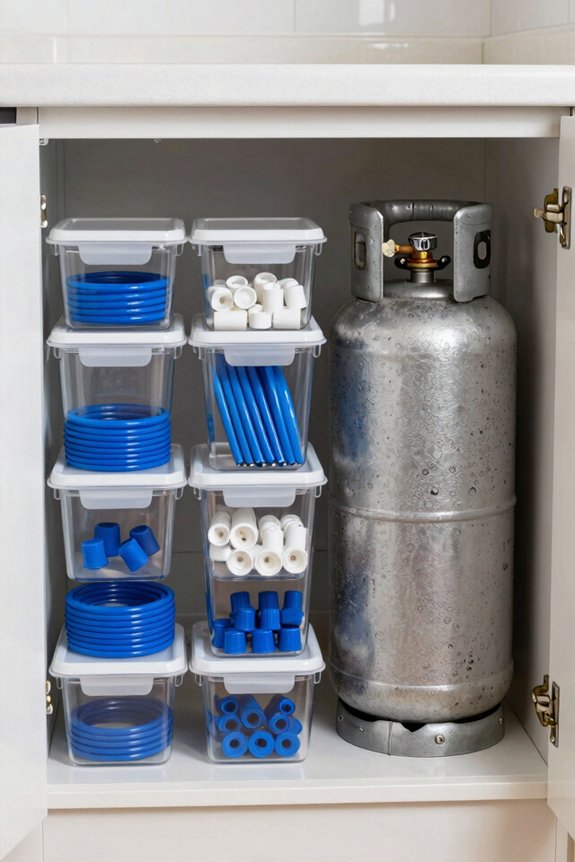
I know how to track which cap belongs to which cylinder. I’ve learned that storing caps and hoses in labeled containers creates order and clarity. I use durable, clearly marked bins to separate gas hose sizes and cap types, preventing dangerous mix-ups during emergencies.
| Item Type | Storage Solution |
|---|---|
| Oxygen caps | Red labeled bin |
| Nitrogen hoses | Blue labeled bin |
| Regulator fittings | Clear plastic container |
| Spare seals | Padded compartment |
| Small connectors | Divided organizer |
I keep containers upright and padded to protect delicate fittings. Color-coded labels speed identification when I’m working quickly.
My labeled containers sit in a dedicated, ventilated cabinet away from flame sources. This safety storage system means I’m never confused about which component belongs where, keeping my gas cylinders organized and accessible.
Position Storage Outside Your Cooking Zones
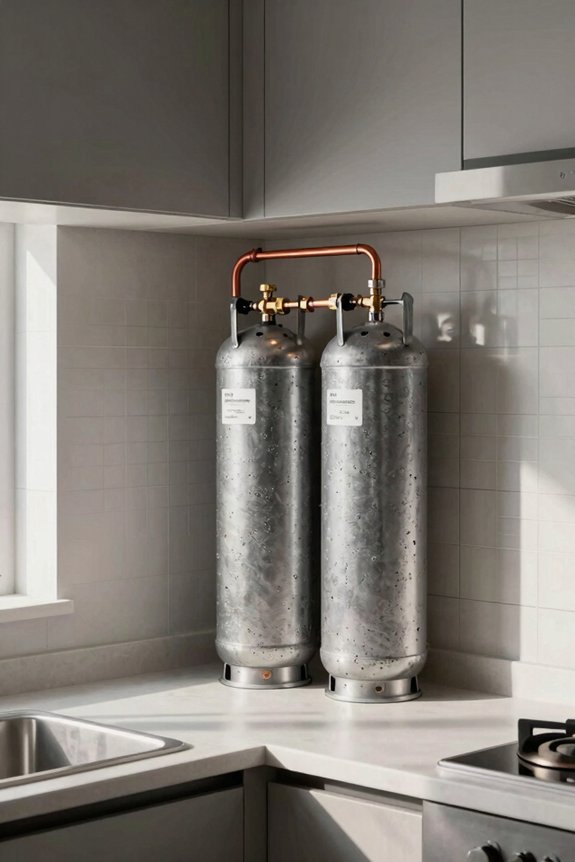
I’ve learned that the safest place for gas cylinders isn’t inside my kitchen at all; it’s outside, away from heat sources and cooking flames. I keep mine in a lockable gas cage made from galvanised steel, which is weather-proof and built tough. The cage sits at least 20 feet from my grill and any combustibles. I added bright warning signs so everyone knows what’s stored there.
This setup protects my family because cooking zones and gas cylinders shouldn’t mix under the same roof. Outdoor storage means I’m not worried about accidents while I’m preparing meals. Plus, the secure enclosure keeps unauthorized people away from the cylinders. Moving storage outside your cooking zones gives you real peace of mind.
Maximize Distance From Your Stovetop
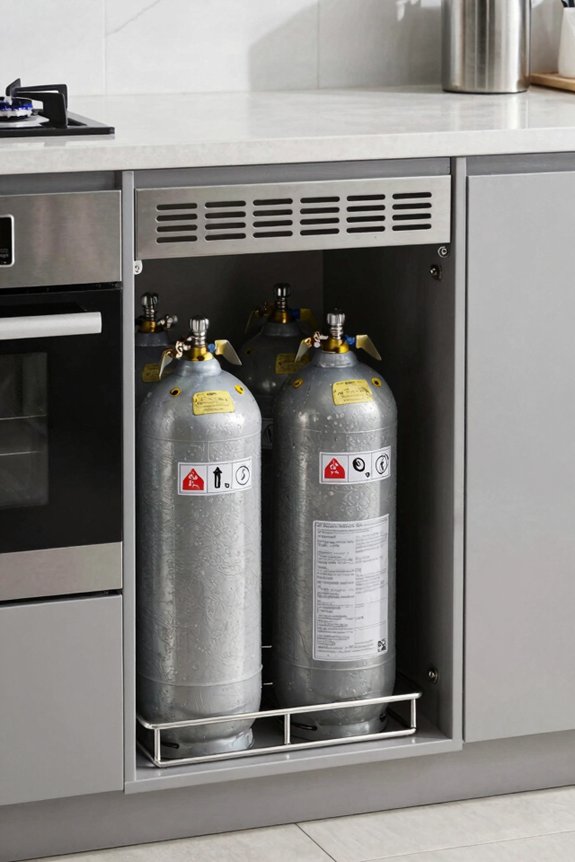
The farther your gas cylinders sit from your stove, the safer your kitchen becomes. I can’t stress this enough: heat and pressure don’t mix well with stored gases. When you keep cylinders at least 20 feet away, you’re dramatically reducing ignition risk.
Here’s what distance really means for your safety:
| Distance | Safety Level | Risk Factor |
|---|---|---|
| Under 10 feet | Dangerous | Very High |
| 10-20 feet | Risky | High |
| 20+ feet | Protected | Low |
| Outdoor storage | Ideal | Minimal |
I recommend placing yours outside whenever possible. If indoor storage’s necessary, use a well-ventilated area far from cooking zones. Your stove’s heat can damage cylinder valves and increase pressure buildup dangerously.
Think of distance as your first defense against fire safety problems. Keep those cylinders cool and separate. You’re protecting your family and home.
Let Air Flow Freely With Open Shelving
While distance keeps your cylinders away from heat, good airflow keeps them safe where they sit. I’ve found that open shelving is my go-to solution for kitchen storage because it lets air circulate freely around my cylinders. This prevents gas buildup in tight spaces.
I pair my open shelving with containment guards on each shelf edge. These simple barriers stop cylinders from rolling off accidentally. The sturdy shelves I chose support multiple cylinders without wobbling or tipping over.
What I love most? I can see everything at a glance. My labeled cylinders sit in clear storage containers, making emergencies less stressful. Positioning shelves away from my stovetop and heat sources creates the perfect safety zone. Open shelving makes storage into something practical and accessible for everyone in my kitchen.
Secure Your Cabinet With Locks and Warning Signs
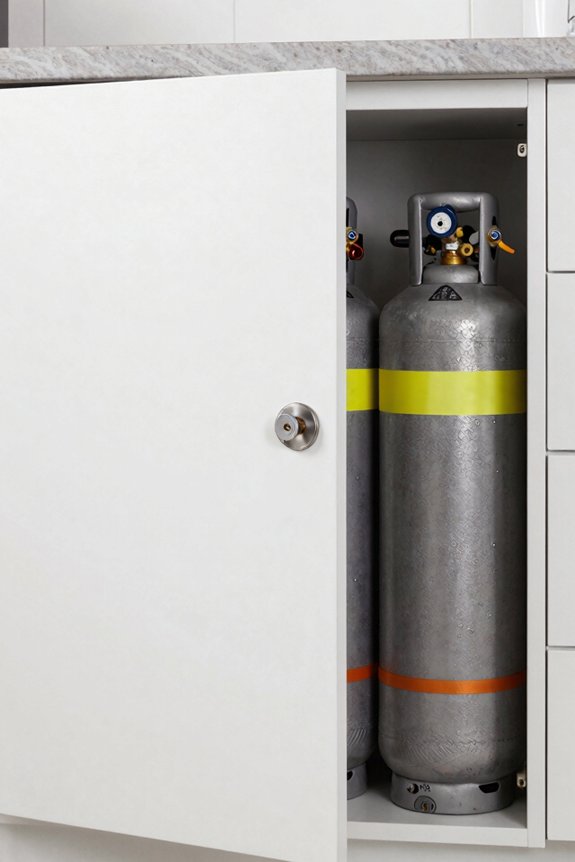
Open shelving works great for visibility, but you’ll want extra protection for your gas cylinders too. I’ve found that lockable doors are very effective for keeping unauthorized people away from these containers. When you secure your cabinet with sturdy locks, you’re taking a real safety step that protects your household.
Here’s what I do: I attach bright warning signs directly on the cabinet doors. These signs immediately tell anyone what’s inside and why they shouldn’t mess with it. Clear labeling keeps everyone informed about potential hazards.
This combination of lockable doors plus warning signs creates a protective system that works. Your family knows the rules. Visitors understand the danger. You get peace of mind knowing your gas cylinders stay safe and secure. That’s the smart approach I recommend.