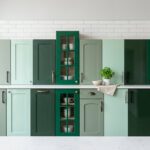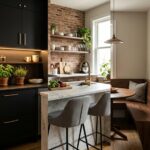
I’ve noticed something exciting happening in kitchens right now. Gone are the days when everything had to match perfectly, with chrome handles everywhere, shiny and cold. Today’s designers are mixing warm brass with matte black, adding textured knurls, and letting metal age naturally.
Your kitchen hardware doesn’t just work anymore; it tells a story. The real impact comes when you understand where to place these pieces and how they actually change the way your whole kitchen looks and feels.
From Polished to Patina: Why Living Finishes Are 2026’s Hero
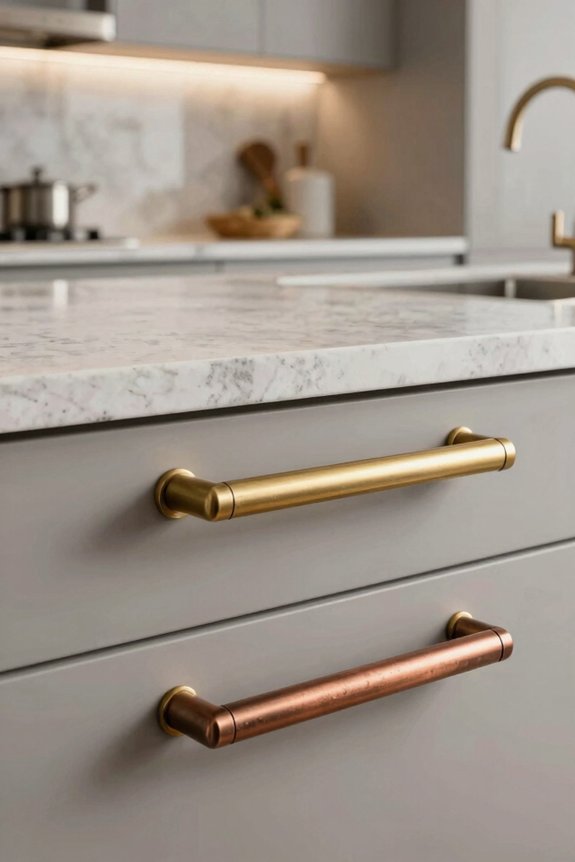
While shiny, perfect kitchen handles used to be the ultimate status symbol, here’s what’s actually happening in modern kitchens right now: designers and homeowners are ditching that flawless look. I’m seeing a major shift toward living finishes like unlacquered brass and aged nickel that develop patina over time. These materials change as you use them, gaining warmth and character instead of staying frozen and fake-looking.
What I find exciting is how this trend celebrates authenticity. Your kitchen handles actually tell a story of everyday life rather than pretending nothing ever touched them. When you pair unlacquered brass with clean, minimal cabinetry, you get excellent contrast. The patina becomes a personality feature that signals longevity and genuine living.
These finishes aren’t trend-chasing; they’re timeless investments revealing depth and tactile richness.
Brass, Bronze, and Beyond: Choosing Warm Metals Over Chrome
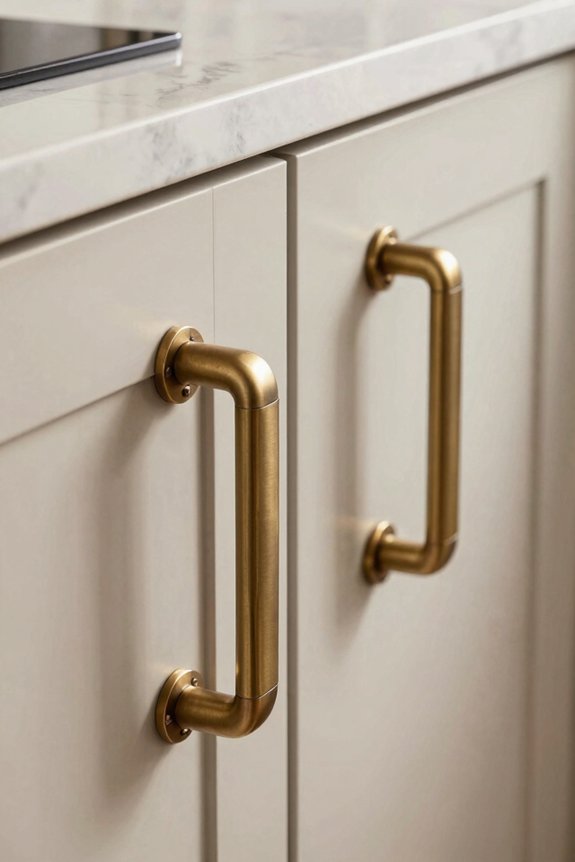
I’m moving away from that shiny chrome look, and I bet you are too. Brass and bronze just feel more real and timeless in a kitchen that actually gets used.
What I love most is watching unlacquered brass develop its own personality over time, getting darker and richer as it ages instead of staying frozen in one polished moment. You don’t need to pick just one metal either; mixing warm brass with matte black or brushed nickel creates depth and sophistication without looking chaotic.
Warmth Over Shine
As chrome and shiny finishes fade from kitchen trends, warm metals like unlacquered brass and bronze are stepping into the spotlight. I’ve noticed designers are ditching overly polished looks. They’re embracing materials that develop character over time instead.
Unlacquered brass and antique brass create what I call “living finishes.” They patina naturally as you use them, darkening and deepening with age. That’s not wear; that’s personality building right before your eyes.
Bronze offers similar warmth with deeper, richer tones. Pair these metals with cool or neutral cabinetry, and you’ll get striking contrast without coldness. The warmth brings everything together beautifully.
Think burnished brass or oil-rubbed bronze hardware. These finishes balance modern simplicity with traditional coziness. You’re not just choosing handles anymore, you’re selecting pieces that age gracefully alongside your kitchen.
Living Finishes Evolve
Why do some kitchen handles look better at ten years old than they did brand new? That’s the appeal of living finishes. I’ve discovered that unlacquered brass, antique brass, and oil-rubbed bronze don’t just sit there; they develop character over time. These patina-focused metals gain warmth and depth as they age, something chrome simply can’t match.
You’re choosing authenticity when you select brass finishes or bronze hardware. They reveal texture and history instead of staying flat and uniform. I pair these aging elegance options with matte black cabinetry for striking contrast. The warmth from patinaed metals carries light across your kitchen, creating visual interest that feels lived-in and genuine.
This isn’t just about looks. It’s about embracing longevity and belonging to a design philosophy that celebrates imperfection.
Mix Your Metals: The End of Matching Everything
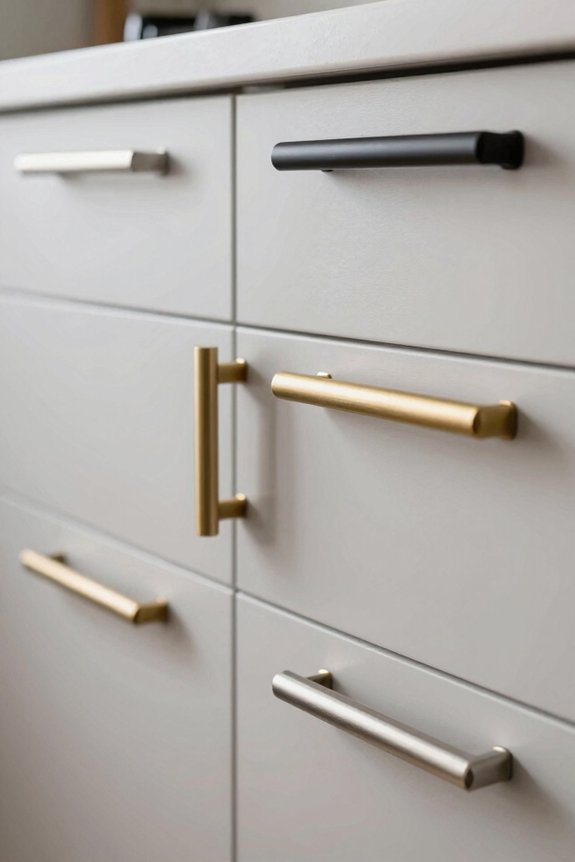
Gone are the days when every handle, hinge, and fixture had to match perfectly across your entire kitchen! I’m loving how designers now embrace mixed metals to create spaces that feel genuine rather than sterile.
Here’s how I’d approach layered kitchen hardware:
- Pair warm brass pulls with cool matte black on your island versus outer cabinets for visual rhythm
- Repeat shapes across different finishes to maintain unity despite the varied metals throughout
- Combine handleless zones with traditional brass pulls and recessed pulls for intentional variety
The key? Make your choices deliberate. Contemporary cabinet handles don’t need uniformity anymore; they need intention. Finish contrast between areas creates cohesion while letting each zone showcase individual character. Your mixed metals strategy becomes that thoughtful touch that makes your kitchen distinctly yours, not a showroom replica.
Texture and Touch: Knurls, Scallops, and Sculptural Details
While smooth finishes dominated kitchens for years, I’m now obsessed with handles that you can actually feel. Knurls and scallops turn ordinary cabinet hardware into something you’ll want to touch. These textured finishes catch light beautifully, creating movement against flat surfaces that flat handles simply can’t match.
I’ve discovered that mixing textures works best; pairing knurled bars with smooth, matte sections balances rugged character with elegance. Art Deco-inspired designs nail this perfectly, combining refined aesthetics with real tactile detail.
Backplates paired with textured handles are a significant upgrade. They add instant luxury and depth to your cabinetry, making everything feel carefully considered and sophisticated.
You’re joining the movement toward handles that engage your senses. This isn’t just about looks anymore; it’s about creating a kitchen that feels as good as it looks.
Pulls vs. Knobs: How Silhouette Changes Your Whole Kitchen
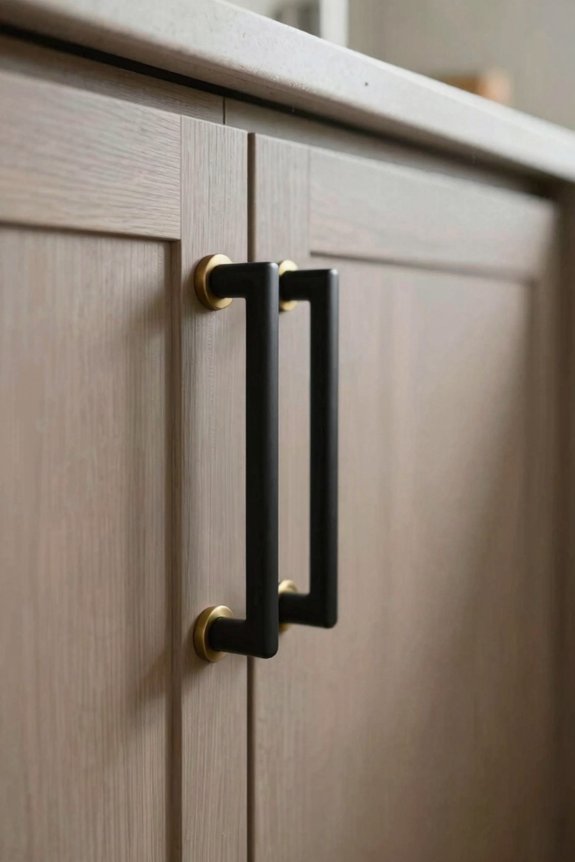
swapping out your hardware completely changes how your kitchen *feels*. I learned this when I discovered how pulls and knobs work differently in your space.
Here’s what I found:
- Pulls expand drawers visually: long, horizontal pulls stretch your cabinet widths and work beautifully in minimalist kitchens.
- Knobs soften upper doors: they establish hierarchy and create breathing room on higher cabinetry.
- Mixed hardware creates rhythm: combining brass pulls with matte black knobs builds visual continuity throughout your design.
Your silhouette choice matters more than you’d think. I now intentionally pair hardware finishes to guide your eye through the kitchen. This visual rhythm makes your space feel considered and deliberate.
You’re not just grabbing handles; you’re crafting how your kitchen actually speaks to you.
Match Your Vision: 4 Hardware Aesthetics and What They Express
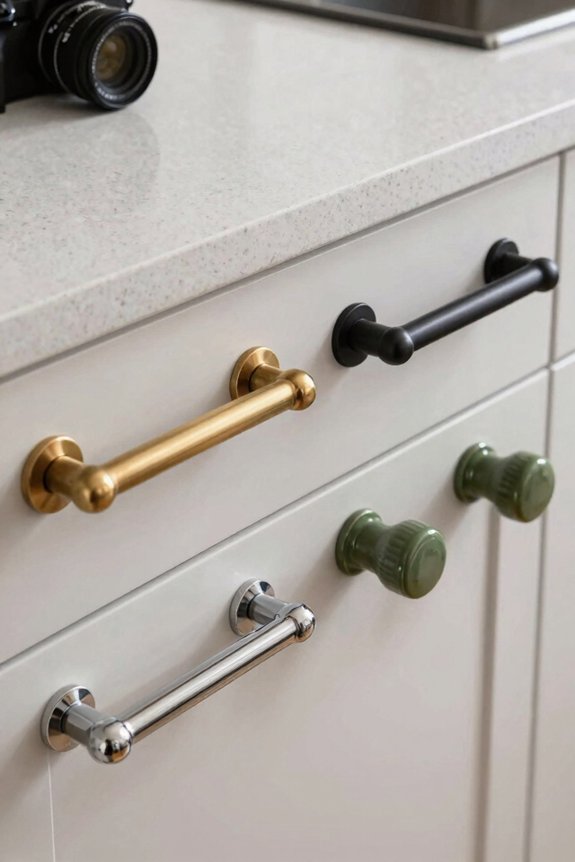
How do you want your kitchen to feel? Your hardware choice tells that story. I’ve found that each aesthetic creates its own vibe, from bold to understated. Let me show you what resonates with your style.
| Aesthetic | What It Says |
|---|---|
| Minimalist | Clean, intentional, modern |
| Industrial | Strong, edgy, authentic |
| Transitional | Balanced, welcoming, versatile |
| Sculptural | Creative, confident, distinctive |
Minimalist designs favor long horizontal pulls and low-profile pulls that whisper rather than shout. Industrial vibes embrace knurled texture and brass mixed finishes for raw authenticity. Transitional blends both worlds seamlessly.
Sculptural is where statement handles shine: oversized, geometric, unapologetically bold on your island or focal zones. Your hardware isn’t just functional. It’s your kitchen’s personality. Choose what makes you smile every morning.
Where to Place Them: Hardware Scale and Visual Hierarchy
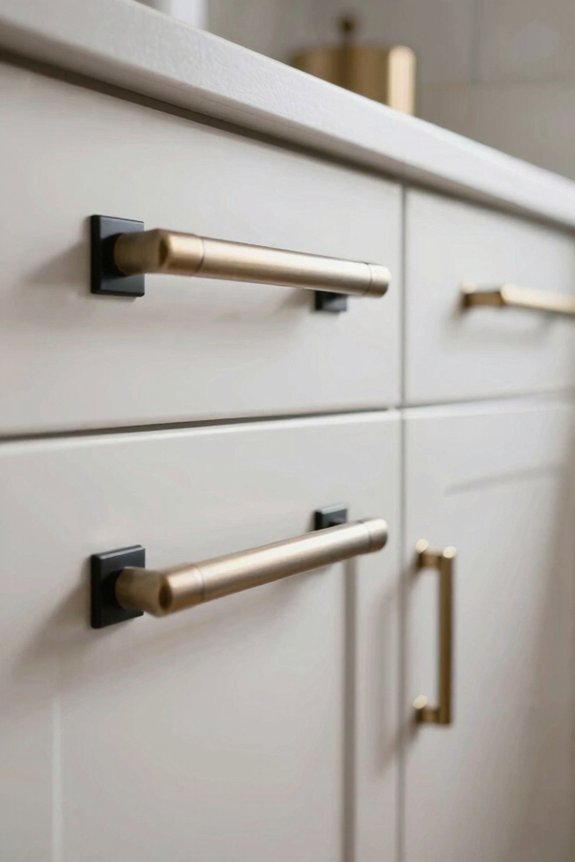
Your hardware placement matters just as much as your style choice. I’ve learned that strategic positioning creates visual hierarchy and guides your eye through the kitchen with purpose.
Strategic hardware placement creates visual hierarchy and guides your eye through the kitchen with purpose.
Here’s what I’d recommend:
- Use pulls vs knobs strategically – Place knobs on upper cabinets and reserve longer pulls for lower drawers to establish clear hierarchy
- Emphasize your large island pulls – Mix oversized pulls on islands with smaller knobs elsewhere, creating purposeful rhythm and drawing attention to your kitchen’s centerpiece
- Maintain cohesive finishes – Pair hardware scale consistently across all surfaces so everything feels connected and deliberate
When you coordinate hardware scale with finish, you’re not just organizing your kitchen. You’re creating visual flow that makes the space feel larger and more sophisticated. That’s the result of thoughtful placement.
When to Go Handleless: Hybrid Zones and Minimalist Strategies
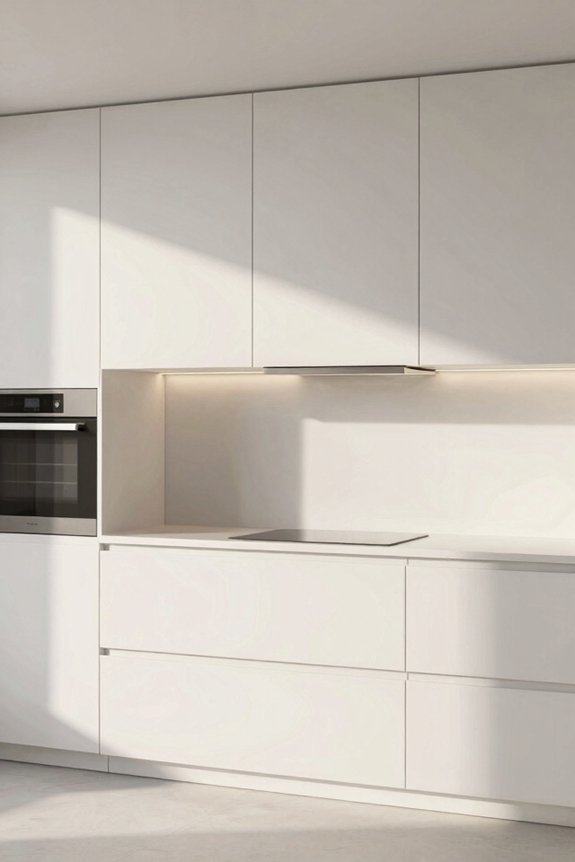
I’ve found that going completely handleless isn’t always realistic, so here’s where hybrid zones save the day. You can keep upper cabinets sleek and handleless while adding recessed cup pulls or slim hardware to drawers you use constantly, giving you the clean look you want without sacrificing everyday function.
This mix-and-match approach lets you balance minimalism with practicality, creating a kitchen that looks modern but actually works for how you cook and live.
Seamless Minimalist Integration
When should you actually skip the handles? I’ve found that going handleless works best when you’re committed to the whole aesthetic. Here’s what I recommend:
- Choose recessed pulls strategically – I place them only where you’ll actually grab (pantry drawers, upper cabinets). This keeps your seamless look intact while staying functional.
- Mix finishes thoughtfully – Pair handleless fields with matte black or brushed nickel accents. These low-profile hardware choices reflect light without creating visual clutter on your flat-panel doors.
- Use long horizontal pulls on wider drawers – A sleek 12-inch pull anchors the cabinetry and defines its width beautifully.
The key is balancing practicality with minimalism. You’re creating a kitchen that looks well-thought-out, not incomplete. This hybrid approach gives you that streamlined silhouette everyone wants.
Strategic Hybrid Zone Placement
So how do you actually decide which cabinets get handles and which stay sleek and bare? I’d recommend creating hybrid zones. Put handles on your hardworking drawers and pantry doors—these spots need grip access. Keep handleless fronts on upper cabinets and display areas you use less often. This creates visual rhythms that feel well-thought-out, not random.
Recessed pulls offer the perfect middle ground. They’re subtle enough to maintain that minimalist vibe while giving your fingers something to grip. I’ve found that balancing handled and handleless sections anchors both vertical and horizontal lines beautifully.
Think strategically about your workflow. Your most-used zones deserve functional handles. Less-visited sections? Go sleek. This handle placement strategy supports the modern aesthetic you’re craving while keeping everything genuinely accessible.
Backplates, Rails, and Luxury Touches: Beyond Basic Hardware
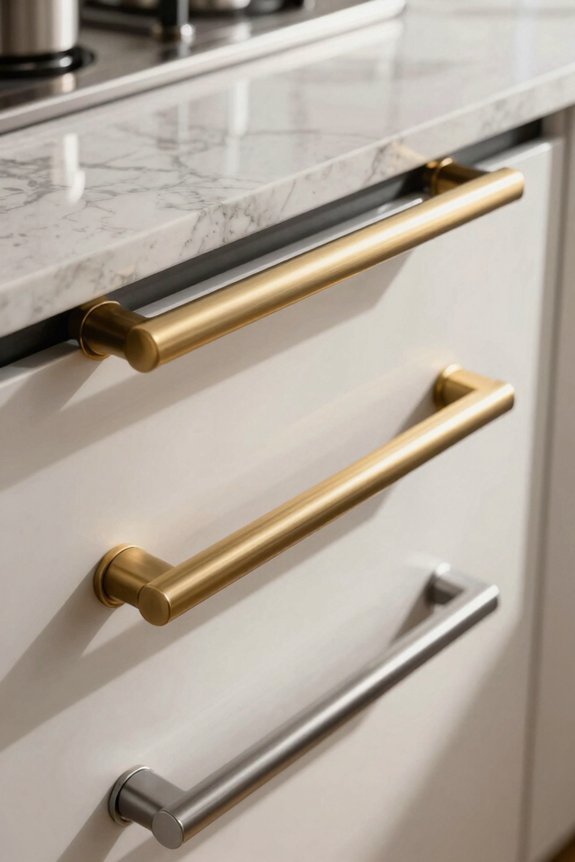
Ever notice how a simple knob transforms the moment you add a decorative backplate behind it? I’ve watched kitchens completely change with this one trick. Here’s what I’m seeing trending:
- Backplates and rails frame your handles beautifully, adding instant luxury without replacing cabinets
- Living metals like unlacquered brass develop character over time, showing warmth and authenticity
- Textured details such as knurled pulls and leather-wrapped rails feel wonderful in your hand and catch light beautifully
You don’t need a total hardware overhaul. Layer backplates over existing knobs for contrast and individuality. Brass rails anchor your design while improving accessibility.
These tactile details create visual interest under different lighting conditions. When you combine luxury finishes with thoughtful placement, your kitchen instantly feels more deliberate and inviting.
Hardware Checklist: Your 5-Step Decision Guide for 2026
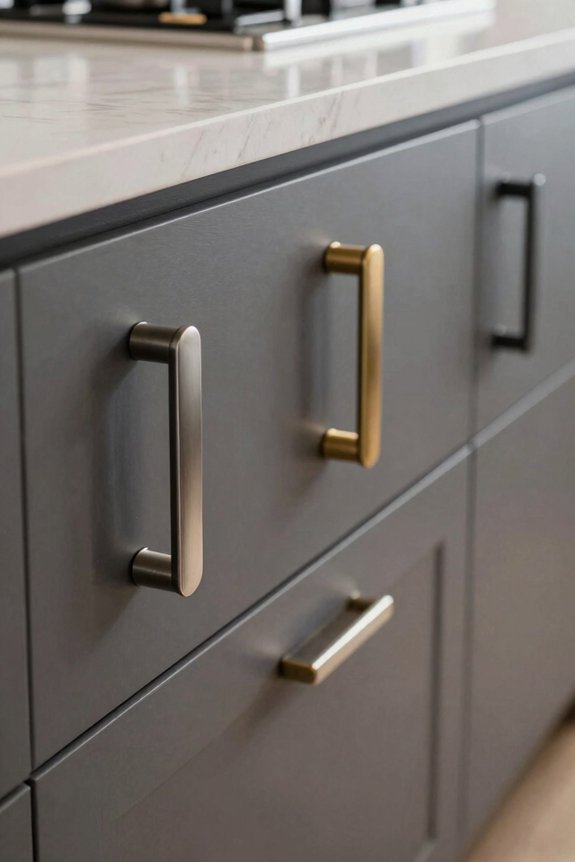
How do you pick the right handles when there are endless options? I’ll walk you through my decision process that keeps things simple and stylish.
| Decision Step | What to Consider |
|---|---|
| 1. Material Mix | Pair brass with matte black for contrast |
| 2. Texture Details | Choose knurls or scalloped edges for interest |
| 3. Finish Type | Select living finishes that age beautifully |
| 4. Layout Strategy | Combine handleless zones with pull hardware |
| 5. Overall Vibe | Make sure elegant silhouettes match your kitchen |
Start by identifying your mixed finishes preference. Next, decide if you want textured knurls or smooth surfaces.
Then choose between static finishes or living finishes that develop character over time. Consider blending handleless zones with visible pulls for practicality. Finally, step back and verify everything feels unified and works well together. This approach helps you create a kitchen that’s authentically yours while staying current with 2026 trends.