Did you know that Indian kitchens are used 40% more than Western kitchens? That’s because cooking’s at the heart of Indian homes. I’ve found that updating your kitchen doesn’t mean starting from scratch; it means making smart choices.
Blending traditional elements with modern colors, picking the right layout, and using practical materials can completely change your space. So, what’s the key to a kitchen that’s both beautiful and hardworking?
Blend Traditional Motifs With Modern Color Palettes
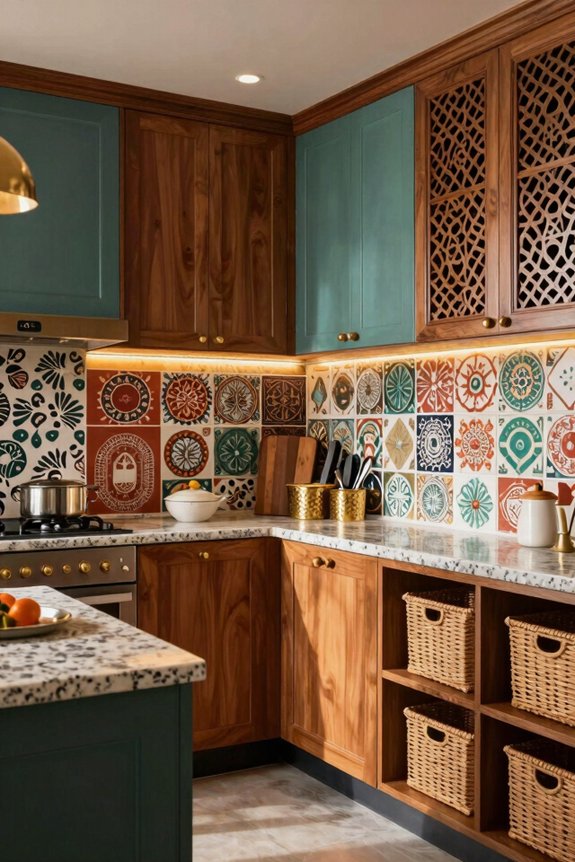
How’d you like to create a kitchen that honors your heritage while feeling completely current? I’ve found that pairing traditional motifs with modern color palettes is a particularly effective approach for any Indian kitchen.
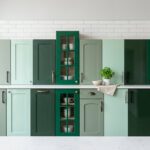
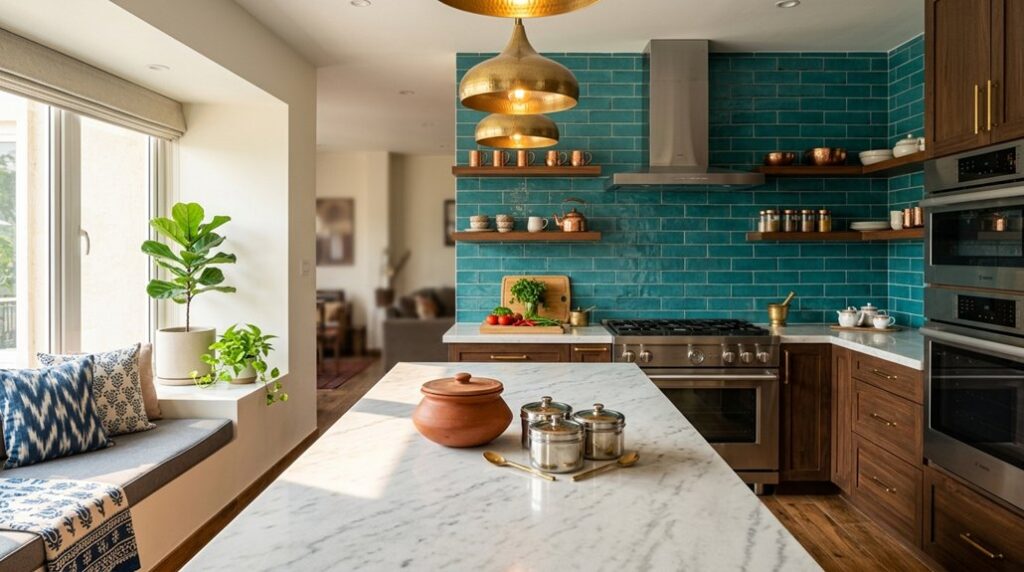
Try combining heritage patterns with contemporary shades like Matte Black and Warm Wood, or Sage Green with Cream. These combinations feel fresh yet grounded in culture. Navy Blue paired with Brass hardware? That’s exceptionally well done.
What I love about this approach is how it works in modular kitchens too. You can use traditional cabinet silhouettes with handle-less, high-gloss finishes. This merges timeless detailing with minimalist trends beautifully.
The result is a space that tells your story while staying modern and functional. Your kitchen becomes a reflection of who you are, rooted and forward-thinking.
Choose the Right Layout for Your Space and Cooking Style
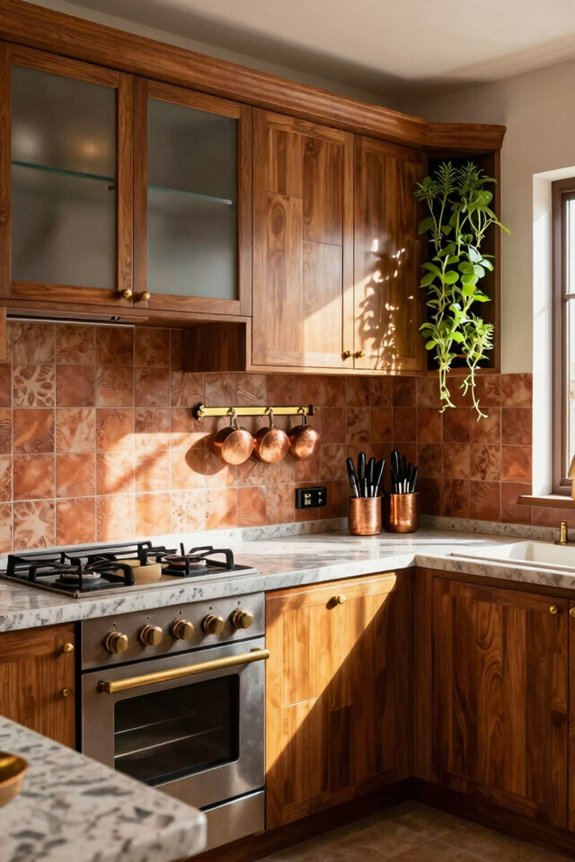
Once you’ve locked in your design style, picking the right kitchen layout becomes your next big move. I’ll help you find what works best for your space and cooking habits.
| Layout Type | Best For | Key Feature |
|---|---|---|
| U-shaped kitchen | Maximum storage | Three-wall design |
| Island kitchen | Larger spaces | Extra prep area |
| L-shaped layout | Corner efficiency | Optimal angles |
Consider your home’s size and how you cook. A U-shaped kitchen gives you tons of storage and countertop space, perfect if you love entertaining. Got a smaller place? Try a straight-line layout or parallel kitchen instead.
They’re efficient and won’t feel cramped. An island kitchen works great if you’ve got room. You’ll get extra prep space plus casual dining. I think the key is matching your layout to both your space and your cooking style. That’s when kitchens really shine.
Plan Your Budget With Cost-Effective Material Choices
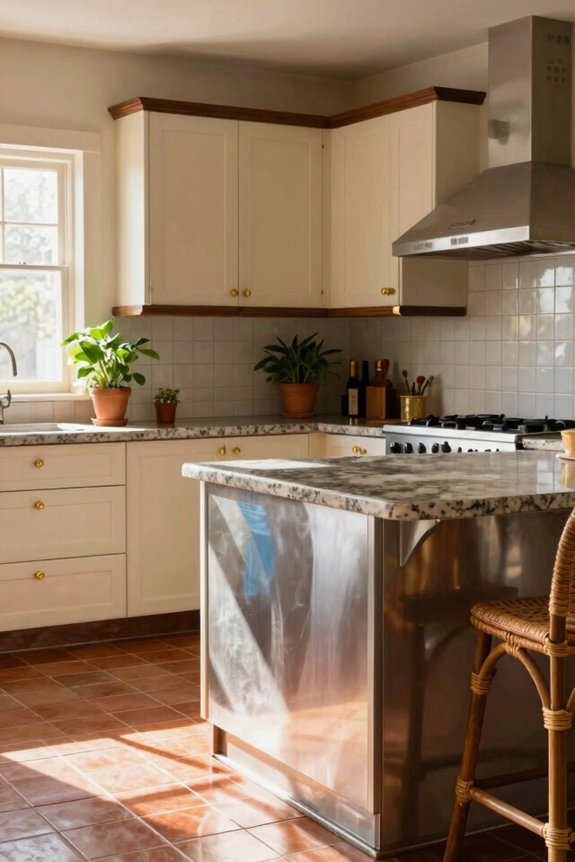
What’s holding you back from your dream kitchen? I’ll tell you, budget worries! But here’s the good news: you don’t need to spend a fortune renovating your Indian home.
A modular kitchen starts at just 1.7 Lakhs, making it totally achievable. I recommend choosing budget-friendly laminate cabinets paired with prefabricated quartz or Granite Black countertops. Skip pricey appliances; mid-range energy-efficient models work beautifully.
For storage optimization, tall pantry units maximize space without expanding your footprint. Simple ceramic tile backsplashes and economy brass handles keep costs down beautifully.
Here’s my insider tip: leverage local labour! Nearby carpenters and electricians dramatically reduce installation expenses.
Want confidence in your choices? Livspace offers free designer consultations and lifetime warranties on modular products. You’re absolutely capable of creating a beautiful kitchen that fits your budget!
Maximize Storage With Full-Height Cabinets and Vertical Organization
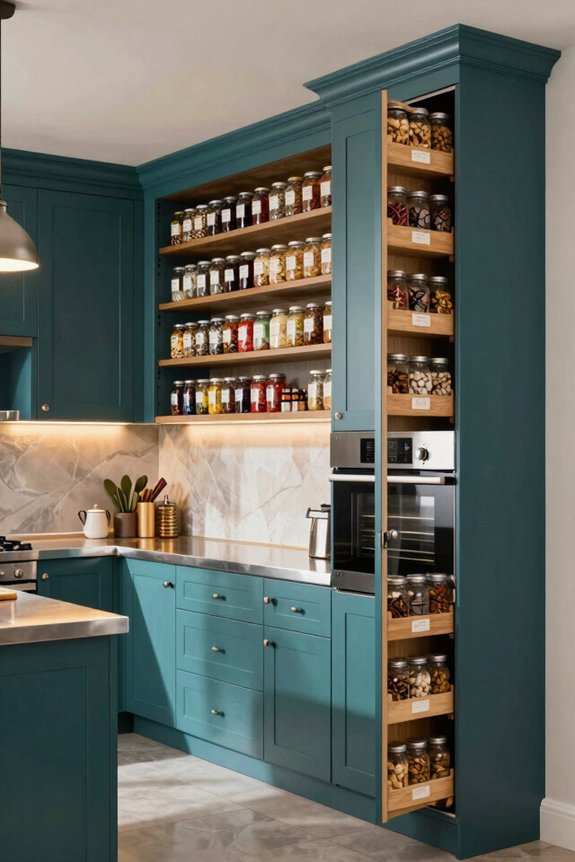
Now that you’ve locked in your budget with smart material choices, let’s talk about squeezing every inch of storage from your kitchen!
Full-height cabinets are highly effective for storage efficiency. They maximize vertical space without eating into your floor area, which is perfect for compact Indian kitchens. I’ve found that tall pantry units keep everything organized and accessible. Pull-out drawers make reaching items in back corners effortless, so no more stretching or bending!
Full-height cabinets maximize vertical space in compact Indian kitchens, keeping everything organized and accessible without floor clutter.
In modular kitchens, full-height cabinetry creates that sleek, unified look everyone loves. Your space feels bigger and cleaner. Eye-level storage puts frequently used spices, oils, and appliances within easy reach.
Pair these cabinets with open shelving for visual balance. This combination helps create organized spaces where everything has its place.
Pick Heat- and Moisture-Resistant Materials for Indian Kitchens
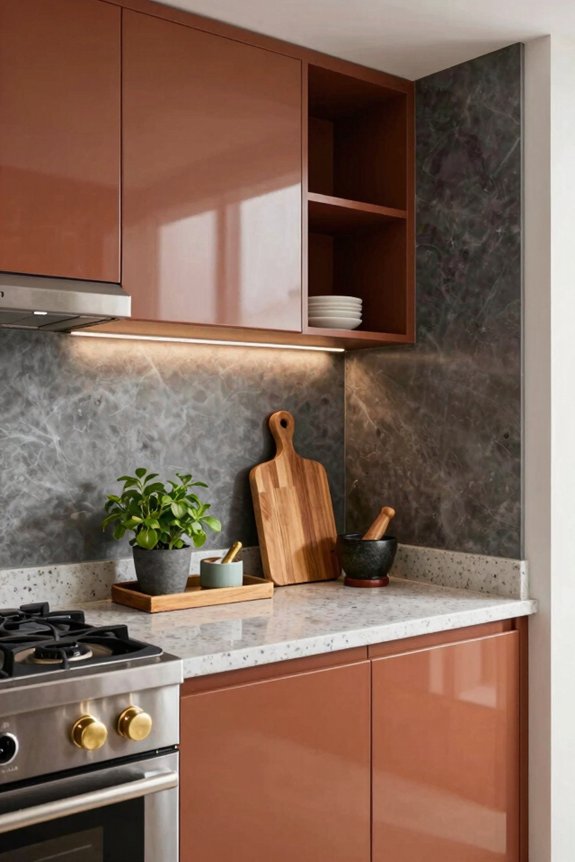
I’ve learned that Indian kitchens face unique challenges from heat, steam, and cooking splatters that demand smarter material choices. You’ll want cabinets made from HDMR or plywood with acrylic finishes since they handle moisture much better than basic MDF, plus stainless steel appliances and laminate surfaces resist stains and wipe clean quickly.
Large-format porcelain tiles on your walls beat smaller tiles because they have fewer grout lines where moisture and grime get trapped.
Materials For Indian Cooking
Have you ever noticed how Indian cooking creates steam, splatters, and heat that’d wear down ordinary kitchen materials?
I’ve learned that choosing the right materials is important. Here’s what works best:
- Stainless steel appliances and sinks resist rust and stains from daily cooking
- Laminates for flooring balance style with easy cleanup in small kitchen design
- Wood laminates for cabinets support modular kitchen design with tall storage and islands
For budget-friendly options, I recommend MDF or plywood with acrylic finishes. Tiles on walls handle splashes beautifully. In open kitchen layouts, neutral tones create visual flow while hiding cooking marks.
HDMR materials offer higher durability if you’re willing to invest more. Stainless steel appliances stay cleaner longer, which is crucial when you’re cooking spiced dishes daily. These materials help your kitchen cabinets and counters last years longer, making them smart investments for Indian cooking spaces.
Durability And Moisture Protection
Why does moisture destroy kitchens so fast? Indian kitchens face constant steam and humidity that wreak havoc on ordinary materials. I’ve learned that choosing the right materials is essential.
I recommend HDMR for your cabinets because it’s highly durable and moisture-resistant. Pair it with acrylic finishes or plywood for budget-friendly options that actually last. Don’t skip edge sealants; they’re critical for protection.
| Material | Best Use | Why It Works |
|---|---|---|
| HDMR | Cabinets | Superior moisture resistance |
| Stainless Steel | Appliances | Resists heat and humidity |
| Tiles | Walls/Floors | Withstands stains and moisture |
| Laminate | Surfaces | Affordable and water-resistant |
Stainless steel appliances clean easily and handle heat brilliantly. Tiles on walls and floors are practical, moisture-proof, and low-maintenance. You’ll appreciate how these choices keep your kitchen looking fresh for years.
Make Your Kitchen Modular for Future Changes
Create a kitchen that grows with you! I’ve discovered that modular kitchens offer significant advantages for future-proofing your cooking space. Here’s why I’m excited about them:
Create a kitchen that grows with you through modular design—future-proof your cooking space with adaptable layouts and flexible components.
- Flexible layouts like L-shaped and island designs let you reconfigure without major overhauls
- Adaptable cabinetry with tall storage and full-height cabinets means you can swap elements easily
- Open shelving and vertical storage make rearranging simple as your needs change
When I chose modular components, I gained real flexibility. Livspace’s lifetime warranty and 146 quality checks give me confidence my kitchen won’t become outdated. You can upgrade appliances, swap storage solutions, and refresh your aesthetic without starting over.
It’s like building with LEGO: you’re never stuck. Your kitchen adapts to your life, not the other way around.
Create Open, Bright Spaces With Strategic Ventilation and Layout
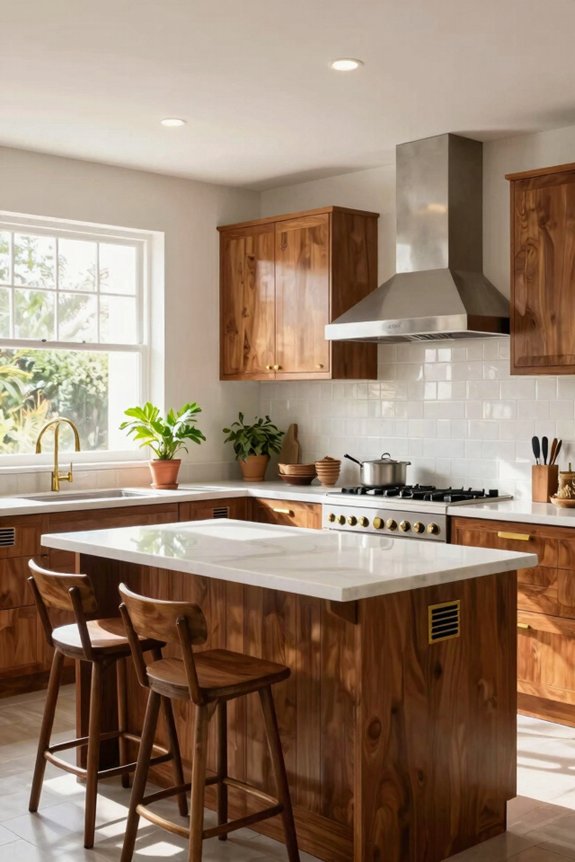
I’ve found that how you arrange your kitchen and let light flow through it affects how it actually feels to cook there. When I position my counters in a U-shape or along parallel walls, I create natural pathways that let me move smoothly while keeping air circulating throughout the space.
Strategic windows, open shelving, and glass-front cabinets work together to flood the kitchen with daylight and make even smaller areas feel more spacious.
Layout Optimization For Airflow
When you open up your kitchen layout, you’re actually inviting natural light and fresh air to do the strenuous work for you! I’ve found that smart arrangement improves how your space feels and functions.
Here’s what I recommend:
- Position your island kitchen in the center to encourage cross-ventilation from opposite walls
- Install windows or skylights on at least two sides for constant airflow optimization
- Choose parallel or U-shaped designs that naturally channel breezes through your cooking area
Open layouts with strategic windows aren’t just pretty. They’re practical. You’ll notice cooking smells dissipate faster, steam clears quicker, and your kitchen stays cooler.
Natural light eliminates dark corners where moisture builds up. When you combine these elements deliberately, you’re creating an efficient space where you actually want to spend time. That’s what makes this approach worthwhile.
Natural Light Maximization Strategies
How’d you like your kitchen to feel twice as big without knocking down walls? I’ve discovered that natural light makes everything better. Open layouts with strategic window placement flood your space with brightness, making it feel expansive and welcoming.
I recommend soft whites and pale greys for your light color palette—they bounce light beautifully around the room. Install tall storage solutions that reach toward windows; they guide your eye upward and maximize vertical space.
Here’s what I love: cross-ventilation through opposing windows creates airflow while brightening your cooking area. Consider skylights or box French windows if you can. These openings don’t just look beautiful; they work hard for your kitchen’s comfort.
When natural light and smart layout combine, you’re creating a space that feels genuinely bigger and brighter.