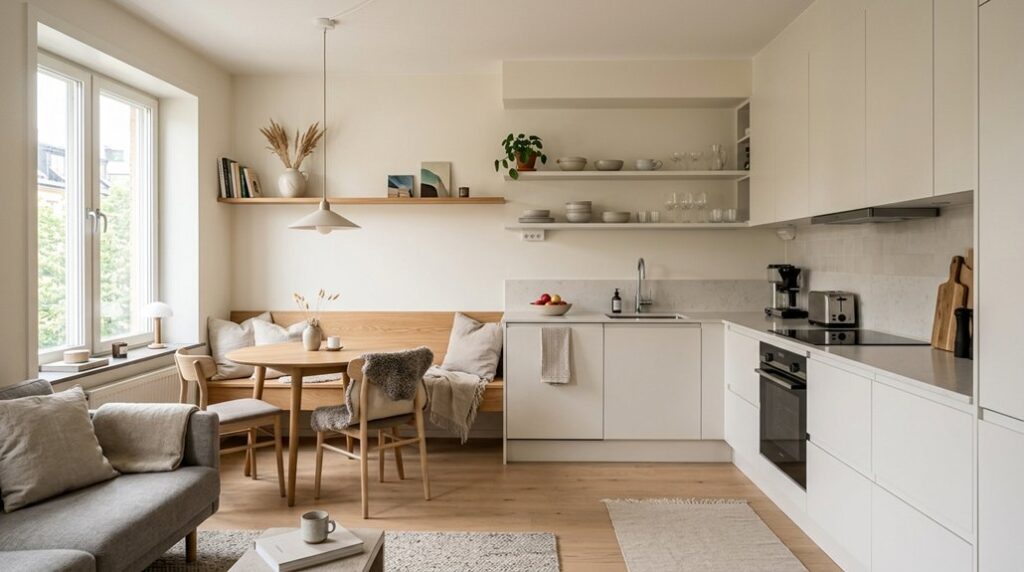
Like a game of Tetris, fitting both a kitchen and sitting area into one compact space takes strategy, but I promise it’s totally doable. I’ve discovered that removing walls between these rooms doesn’t mean sacrificing function or comfort. The trick is using smart furniture placement, the right colors, and clever lighting tricks.
I’m here to show you exactly how to create a layout in your cramped space that feels spacious and works brilliantly for how you actually live.
Why Open Concept Works in Small Spaces
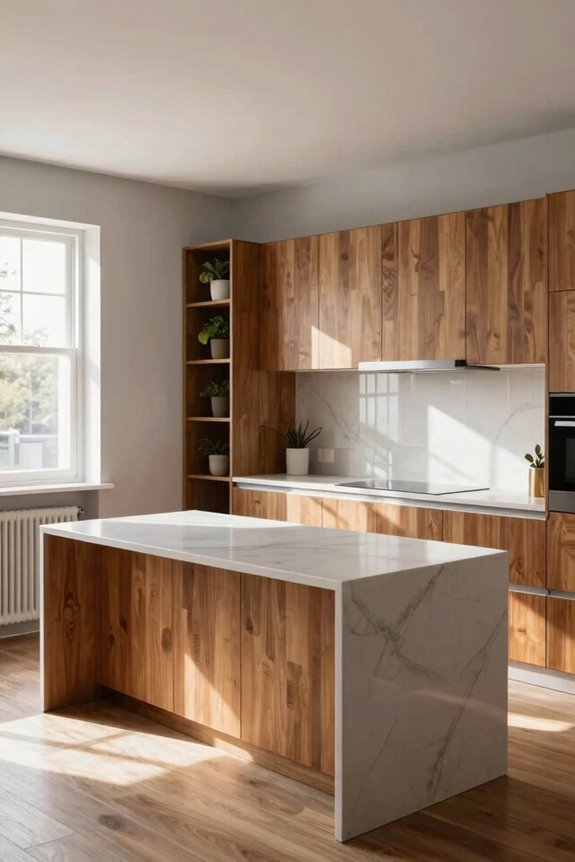
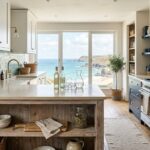
When you knock down the walls between your kitchen and sitting room, your space instantly feels bigger. Open concept design works well in small spaces by removing visual barriers that make rooms feel cramped. Light flows freely from your windows, brightening everything naturally.
Open concept design removes visual barriers that make small spaces feel cramped, instantly brightening your home with natural light.
You can cook, eat, and relax without closed doors separating you from family. Movement feels easier. Comfort improves instantly.
To define your living zone without walls, I use area rugs and position sofas facing the open kitchen. These visual flow cues maintain clear sightlines throughout the space. Light colors on cabinetry and walls reflect daylight beautifully, enhancing that openness you’re craving.
Layered lighting, including ambient, task, and accent options, keeps everything functional while preserving the airy feel. This is the key to maximizing small spaces successfully.
5 Layout Configurations That Work in Tight Spaces
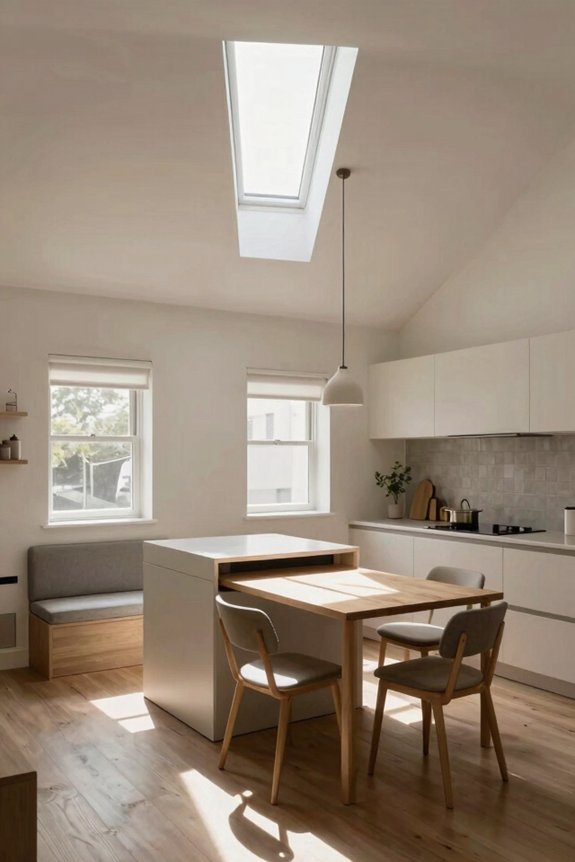
How do you arrange a kitchen and sitting room when square footage is limited? I’ve found five configurations that work beautifully.
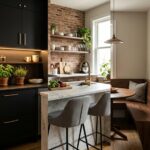
The one-wall kitchen keeps your living room open and airy. An L-shaped layout wraps storage along two walls, positioning your dining area perfectly for chatting while you cook. A galley kitchen with a central walkway feels less cramped because it opens into your living room.
Want counter space without blocking movement? A peninsula kitchen adds prep area while staying attached to your main kitchen. Finally, an island with slim seating provides a compact anchor point that tucks away nicely.
Each configuration maximizes your small space differently. They’re designed so you’re never isolated from guests while cooking. Pick the one that fits your lifestyle best!
Zone Your Kitchen-Sitting Room Without Dividing Walls
Open kitchen-sitting room layouts don’t need walls to feel organized and distinct! I create zoned living areas using smart design tricks that actually work.
Here’s what I do: I position a sofa with its back facing the kitchen, providing an instant visual break. An area rug anchors my sitting zone while keeping sightlines open. I add an island or peninsula to signal where cooking ends and relaxing begins.
Low-profile furniture keeps my kitchen-sitting room layout feeling spacious. Compact chairs and banquettes don’t block walkways. I also use ceiling lighting strategically: recessed lights over the kitchen and pendant fixtures in my living area.
These layers guide movement naturally. No walls needed! You’ll create distinct zones that feel connected, making your small space feel well-planned and welcoming.
Pick the Right Furniture Size and Placement
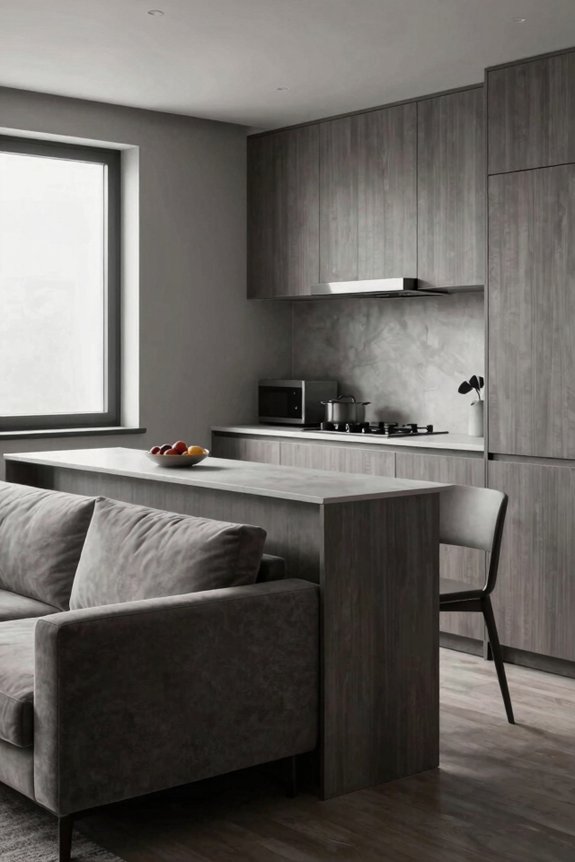
I’ll show you how to pick furniture that actually fits your small kitchen-sitting room and keeps everything flowing smoothly. You’ve got to match your sofa and chairs to your room’s actual size—not squeeze in oversized pieces that block walkways.
Multi-functional pieces like storage benches and compact seating let you do more with less, so you’re not sacrificing comfort or style for space!
Scale Furniture to Room Dimensions
The real innovation in compact kitchen-dining nooks is scaling furniture to match your actual room dimensions. I’ve learned that cramming oversized pieces into small open concept spaces crushes walkways and sightlines alike.
Here’s what works: choose multi-functional pieces like a slim-profile island with under-counter storage instead of bulky alternatives. This approach maximizes workspace without suffocating movement patterns. For sitting areas, I recommend low-profile sofas positioned across from the kitchen. They preserve sight lines while defining zones naturally.
Your space planning strategy should include at least 1.97 feet of clearance around islands. Use appropriately sized rugs to anchor seating and guide traffic flow. Edge-to-edge furniture layouts keep pathways fluid between cooking and sitting areas.
When you scale pieces thoughtfully, your small space becomes an inviting, functional home where everyone moves comfortably together.
Strategic Placement for Clear Walkways
How do you move comfortably through a small kitchen-sitting room without constantly squeezing past furniture?
I keep clear walkways by maintaining at least 1.97 feet around central islands and 3.61 feet around zones. This circulation space prevents that cramped feeling. I position my sofa with its back facing the kitchen; it naturally signals area delineation while preserving sightlines for easy traffic flow.
I choose low-profile furniture pieces. Wall-leaning seating and compact tables that tuck underneath work beautifully in open concept spaces. My dining nook sits away from main routes between zones.
Rugs and narrow shelving serve as visual dividers without blocking movement. They delineate areas subtly. Strategic placement means you’re not constantly navigating around obstacles. You’ll move freely, and that’s when small spaces actually feel spacious!
Multi-Functional Pieces for Flexibility
Once you’ve nailed those clear walkways, it’s time to fill your space with furniture that actually earns its place. I’m talking multi-functional pieces that work harder than traditional furniture.
Consider an island that doubles as your dining table. Look for benches with under-seat storage for linens and serveware; you’ll love keeping clutter hidden! Choose modular or convertible furniture you can reconfigure based on your mood. Floating furniture arrangements maximize visible floor space beautifully.
A console extension table adapts from prep surface to dining-height when you need it. Coffee tables with lift-up tops hide remote controls and magazines. These space-saving multipurpose pieces give you flexibility without overwhelming your layout. You’re creating a room that adapts to your life, not the other way around.
Colors and Materials That Open Up Your Layout
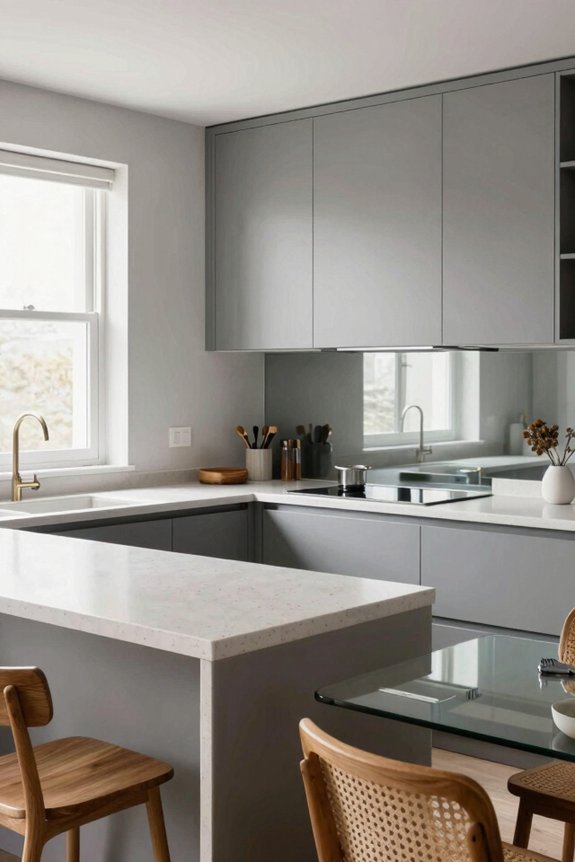
I’m going to walk you through how the right colors and materials can improve your kitchen-sitting room. Light neutrals like whites and soft grays reflect natural light and make your whole space feel bigger than it actually is.
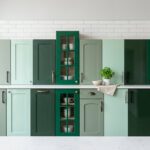
Two-tone cabinets, think creamy uppers paired with slightly deeper lowers, add visual interest while keeping things open and airy. When you tie it all together with matching wood flooring and finishes, you create one seamless, roomy-looking area.
Light Neutrals Expand Space
Want your kitchen-sitting room to feel twice as big? I’ve discovered that light neutrals work well for this purpose. When I painted my walls, cabinets, and ceilings in soft creams and whites, natural light bounced everywhere, making my small space feel airy and open.
The key is staying consistent. I paired light wood finishes throughout both areas, creating that seamless flow open concept spaces need. Two-tone cabinets with lighter uppers and slightly darker lowers add depth without cramping your style. Matching flooring reinforces this expansive feeling beautifully.
| Element | Color Choice | Impact |
|---|---|---|
| Walls | Soft white | Reflects light |
| Cabinets | Light + medium tone | Adds depth |
| Flooring | Consistent light wood | Enlarges space |
| Trim | Matching neutral | Cohesive feel |
Your coordinated color scheme brings everything together, making small spaces feel planned and welcoming.
Two-Tone Cabinet Strategy
How’d you like to instantly make your small kitchen-sitting room feel more spacious and sophisticated? I’d recommend two-tone cabinets, a simple but effective approach for interior design in compact layouts.
Here’s my strategy: paint your upper cabinets a light, airy color like white or soft cream. Then choose a slightly darker shade for your lower cabinets, think soft gray or warm taupe. This approach creates visual balance without overwhelming your small space.
Why does this work? Light upper cabinets keep your ceiling feeling high and open. Darker lower cabinets ground the room and hide everyday wear. Together, they maintain brightness while adding sophistication.
The beauty is that your two-tone cabinets create cohesion with nearby furniture and flooring. They bridge your kitchen and sitting area naturally, giving your open concept home that unified, welcoming feel you’re seeking.
Cohesive Wood And Flooring
Your flooring is the foundation that ties everything together. I’ve found that matching flooring throughout your kitchen-sitting room creates uninterrupted visual continuity that makes small spaces feel larger instantly.
Light wood finishes work beautifully here. They soften neutral spaces and connect your kitchen and living areas seamlessly. When you pair this with two-tone cabinetry, lighter uppers with slightly darker lowers, you maintain an airy feel while grounding the room.
Here’s what makes this approach powerful:
- Matching flooring eliminates visual breaks and enlarges your perceived space
- Light wood finishes and natural materials create planned visual flow across zones
- Coordinating colors reduces visual clutter and enhances your kitchen-sitting room unity
Repeating wood elements throughout both areas builds that coordinated wood and flooring scheme. You’re not just decorating; you’re creating an open space that works together as one.
Layer Your Kitchen Lighting to Expand the Room
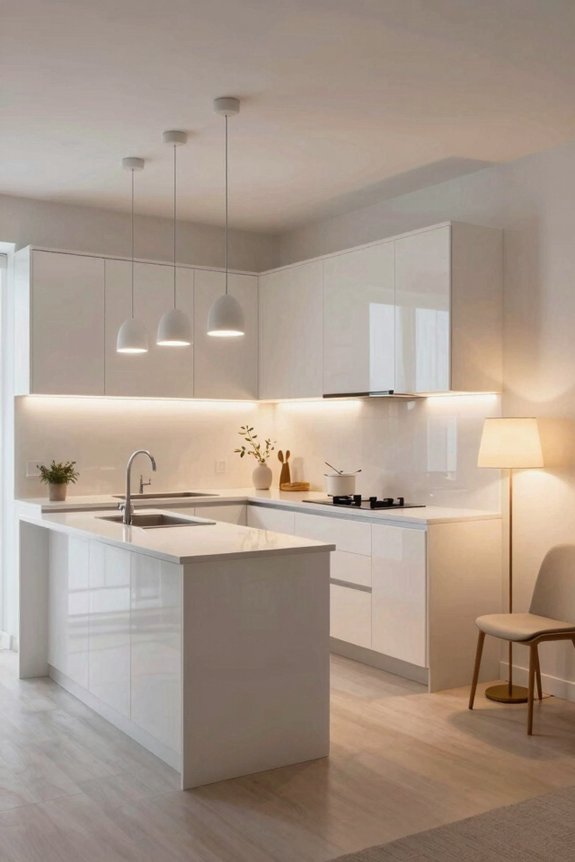
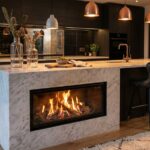
Why does lighting matter so much in a small kitchen-sitting room? It’s simple: layered lighting creates welcoming zones in cramped spaces. I combine three lighting types to make my open concept feel bigger and more functional. Ambient light from ceiling fixtures provides overall brightness. Task lighting over my dining island lets me cook and eat safely. Accent lighting highlights sightlines and creates visual interest without clutter.
Here’s my strategy: I placed recessed lights in the kitchen area paired with a pendant fixture over my island. This anchors the dining zone without overpowering the room. Meanwhile, ceiling fixtures in my sitting area establish clear zone definition. Natural light from exterior walls flows freely across sightlines, keeping everything connected yet distinct. This layered approach maximized my small kitchen-sitting room’s potential.
Maximize Storage Without Cluttering Floors
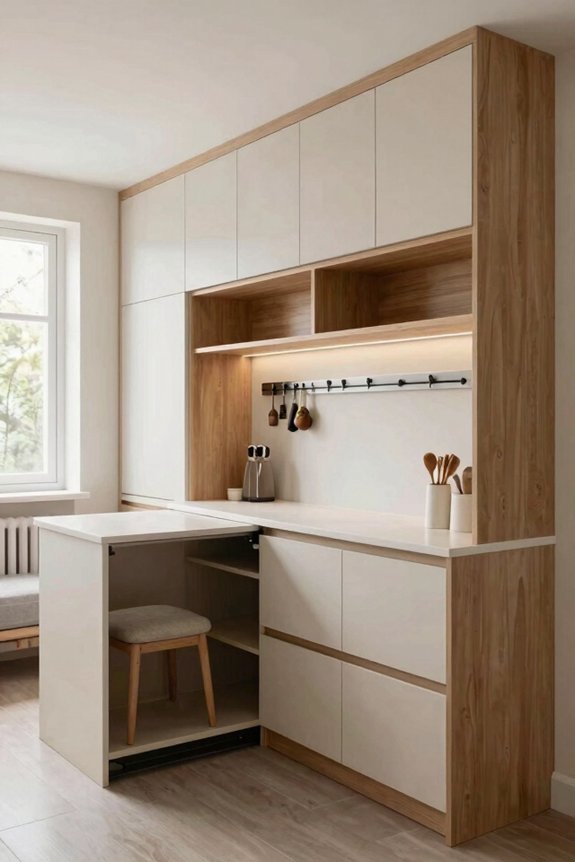
When I first tackled my tiny kitchen-sitting room, I realized my biggest problem wasn’t lack of space; it was wasted space! I’ve discovered smart storage solutions that keep everything accessible without crowding floors.
- Install floor-to-ceiling storage cabinets and add upper cabinet rows to maximize capacity while keeping countertops clear and functional
- Use cabinet-depth appliances like refrigerators to free counter space, then tuck bulky machines into an appliance garage between cabinets
- Incorporate multipurpose furniture with hidden drawers and open shelving on exposed ends to maintain sightlines while storing essentials
These strategies made a real difference in my cluttered kitchen. I’ve embraced small-space organization by choosing vertical solutions over horizontal ones.
Open shelving displays daily items beautifully. My clutter-free counters now feel spacious. These practical fixes create breathing room in your own kitchen-sitting room.
Avoid These 5 Layout Mistakes
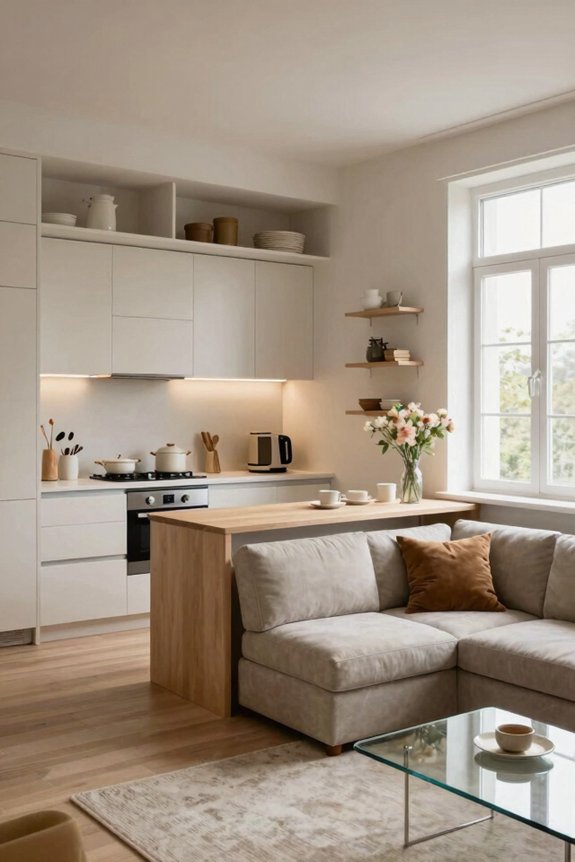
Now that I’ve got my storage dialed in, I had to face the hard truth: even smart storage won’t save a poorly planned layout! I learned this the hard way.
First, I stopped blocking my windows with tall cabinets since natural light makes everything feel bigger. Next, I moved my sofa away from doorways to keep circulation flowing smoothly. I also ditched the bulky dividers that interrupted my sightlines between kitchen and living areas.
Here’s what really helped: I measured my island layout carefully, ensuring at least 1.97 feet of clearance around it for movement. Finally, I cleared my countertops completely. These five changes made my small space feel less cramped and more clutter-free, making my open concept kitchen-sitting room actually work for us!
Your 7-Step Layout Setup Plan
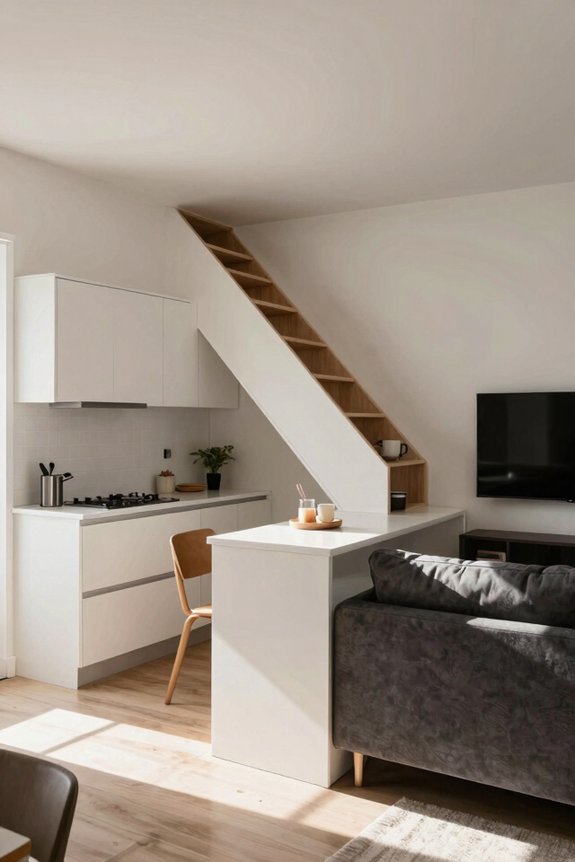
How do you actually turn a cramped kitchen-sitting room into a space that works? I’ve found that following these seven steps creates small spaces that are functional and welcoming.
Here’s what I do:
- Place your kitchen island with 1.97 feet of clearance around it to keep traffic flow smooth and open concept vibes strong
- Layer your lighting with separate ceiling fixtures for kitchen and living areas, plus task and accent lights that guide movement naturally
- Use rugs and modular furniture as zoning tools that define spaces without walls, creating distinct living room layout areas
I then add storage solutions vertically, use consistent flooring throughout, and position seating strategically. This approach maximizes every inch while keeping everything connected and inviting.